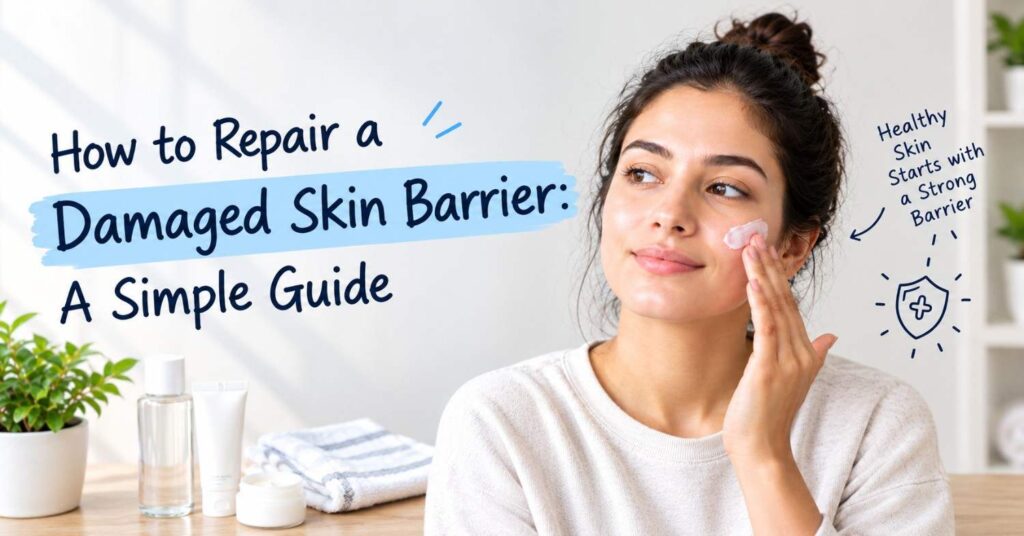
Your skin can suddenly start feeling dry, tight, rough, or unusually sensitive—even when you are using products that worked well in the past. Sometimes, applying moisturizer or sunscreen may cause stinging, and your skin may look red or flaky after cleansing. These changes can be signs that your skin’s protective barrier is irritated or not functioning properly.
The good news is that a simpler skincare routine can often help support skin barrier recovery. You do not necessarily need an expensive collection of serums or a complicated 10-step routine. In many cases, gentle cleansing, regular moisturizing, and daily sun protection are the best places to start.
In this guide, you will learn how to repair a damaged skin barrier, recognize common warning signs, identify skincare habits that may be making the problem worse, and build a simple morning and nighttime routine for healthier-looking skin.
Quick Answer: How Do You Repair a Damaged Skin Barrier?
To help your skin barrier recover:
- Use a gentle, fragrance-free cleanser.
- Wash your face with lukewarm water rather than hot water.
- Apply a moisturizer that contains barrier-supporting ingredients such as ceramides, glycerin, or petrolatum.
- Temporarily pause irritating products, including exfoliating acids, scrubs, and retinoids, if they are causing irritation.
- Wear broad-spectrum SPF 30 or higher sunscreen during the day.
- Avoid picking, scrubbing, or repeatedly washing your skin.
- Give your skin time to recover instead of adding new products every few days.
Persistent redness, burning, itching, or cracking may be caused by a skin condition that needs professional treatment. A dermatologist can help identify the cause.
What Is the Skin Barrier?
Your skin barrier is the outermost protective part of your skin. It helps retain moisture while protecting the body from environmental irritants, allergens, and microorganisms.
A useful way to understand it is to imagine a brick wall. Skin cells act like the bricks, while natural fats called lipids help fill the spaces between them. These lipids include ceramides, cholesterol, and fatty acids.
When this protective layer works properly, it helps limit water loss and keeps your skin more comfortable. When it becomes impaired, moisture can escape more easily, and irritating substances may affect the skin more readily.
A weakened skin barrier does not always mean that your skin is permanently damaged. It can become irritated because of everyday habits, weather conditions, unsuitable products, or an underlying skin condition.
The goal is to reduce unnecessary irritation and support your skin’s natural recovery process.
8 Common Signs of a Damaged Skin Barrier
Skin barrier problems can look different from one person to another. Dryness alone does not prove that your skin barrier is damaged, but several symptoms occurring together may indicate that your current routine is too harsh.
1. Persistent Dryness and Tightness
Does your face feel tight immediately after washing, even when you have not used a strong acne treatment?
This may mean your cleanser is stripping away too much of your skin’s natural oil, or your skin needs more moisture. Dry, tight skin can also result from cold weather, low humidity, or an underlying skin condition.
Try switching to a mild cleanser and applying moisturizer while your skin is still slightly damp.
2. Burning or Stinging After Applying Skincare Products
If products that previously felt comfortable suddenly cause burning or stinging, your skin may be irritated.
Pay attention to how your skin reacts to cleansers, moisturizers, sunscreen, exfoliating acids, and other treatments. Do not assume that a product is working simply because it tingles.
Stop using products that cause significant irritation. If even gentle products repeatedly cause burning, consult a dermatologist.
3. Redness and Increased Sensitivity
A compromised or irritated skin barrier may make your skin more reactive to heat, cold, wind, fragrances, and certain skincare ingredients.
You may notice redness after washing your face or applying products that you previously tolerated.
However, ongoing redness can also be associated with conditions such as rosacea, eczema, or contact dermatitis. It should not automatically be attributed to barrier damage.
4. Flaking, Peeling, or Rough Patches
Flaky skin can develop when the outer layer becomes excessively dry or irritated. Your skin may feel rough, look uneven, or develop small areas of peeling.
Resist the temptation to scrub these patches away. Physical exfoliation can make irritated skin worse.
Instead, focus on gentle cleansing and moisturizing. If peeling is severe, painful, spreading, or accompanied by swelling, seek medical advice.
5. Itching or Discomfort
Itching can occur when the skin is dry or irritated. Scratching may then create additional inflammation and damage.
If itching continues despite gentle skincare, consider that the cause could be eczema, an allergic reaction, or another skin condition that requires a different approach.
6. More Frequent Breakouts
Some people notice more breakouts while their skin is irritated. However, acne has multiple causes, and a damaged skin barrier is not the explanation for every pimple.
Using too many acne treatments at once can increase dryness and irritation, which may make your skin harder to manage.
If pimples are concentrated around your chin and jawline, read our guide to chin acne causes and treatment for more information about possible triggers and treatment options.
7. Skin That Feels Dry but Looks Oily
Oily skin can still become dehydrated or irritated. Your skin may look shiny while also feeling tight, uncomfortable, or flaky.
Adding more harsh cleansers to remove the shine may worsen the problem. Instead, choose a gentle cleanser and a lightweight, non-comedogenic moisturizer that suits your skin.
8. Products That Suddenly Become Difficult to Tolerate
A skincare routine that once worked may become uncomfortable after excessive exfoliation, sun exposure, a change in weather, or the introduction of a new product.
Keep track of new products and changes in your routine. If symptoms started after introducing a particular product, stop using it when irritation is suspected and seek professional advice if the reaction is significant.
What Causes a Damaged Skin Barrier?
Understanding the possible cause is an important part of deciding how to repair your skin barrier. Here are some common triggers.
Over-Exfoliating Your Skin
Exfoliating products can help with specific concerns when used appropriately. Problems may occur when you use them too frequently or combine several strong products.
Common examples include:
- Glycolic acid and other alpha hydroxy acids.
- Salicylic acid and other exfoliating treatments.
- Physical scrubs and cleansing brushes.
- At-home chemical peels.
- Multiple exfoliating products used in the same routine.
If your skin becomes red, flaky, or unusually sensitive, take a break from exfoliation until it settles. You do not need to exfoliate every day to maintain healthy-looking skin.
Using Too Many Active Ingredients
Retinoids, exfoliating acids, benzoyl peroxide, and other active ingredients can help address particular skin concerns. However, using multiple treatments without considering your skin’s tolerance may increase irritation.
For example, someone trying to treat acne, dark spots, and fine lines may introduce several products at the same time. If irritation develops, it becomes difficult to identify the cause.
Introduce new products gradually. If a prescribed treatment is irritating your skin, ask the prescribing clinician how to adjust it rather than changing the treatment plan on your own.
Washing Your Face Too Frequently
Cleansing helps remove sweat, dirt, excess oil, and sunscreen. But repeated washing, vigorous rubbing, or using a cleanser that leaves your skin feeling stripped can worsen dryness.
For most people, a gentle cleanse in the evening and an additional morning cleanse when needed are reasonable starting points. Your routine may differ depending on your skin type, exercise habits, and the products you use.
Avoid scrubbing your face to make it feel extra clean.
Hot Showers and Harsh Cleansers
Hot water and strong soaps can remove natural oils and contribute to dryness.
Use lukewarm water and choose a cleanser designed to be gentle on your skin. After washing, pat your face dry with a clean towel instead of rubbing it vigorously.
Fragrance and Other Irritating Ingredients
Fragrance, essential oils, and certain preservatives or other ingredients may irritate some people or trigger allergic contact dermatitis.
Natural or plant-based products are not automatically safer for sensitive skin. An ingredient’s suitability depends on the individual formula and your own sensitivities.
If your skin reacts easily, consider fragrance-free products and introduce one new product at a time.
For additional guidance, see our article on cruelty-free skincare for sensitive skin.
Weather Changes and Low Humidity
Cold weather, dry indoor heating, wind, and low humidity can increase skin dryness. Air conditioning and frequent temperature changes may also affect how comfortable your skin feels.
During colder months, you may need a richer moisturizer. In hot or humid weather, a lighter formula may be more comfortable.
Adjust your routine according to your skin’s needs rather than following the same product combination throughout the year.
Sun Exposure
Excessive sun exposure can damage the skin and contribute to inflammation, dryness, and premature skin aging.
Daily sun protection is an important part of maintaining skin health. Choose a broad-spectrum sunscreen with SPF 30 or higher and reapply according to the product instructions, particularly after swimming, sweating, or spending extended periods outdoors.
Underlying Skin Conditions
Not every case of redness, peeling, or sensitivity is caused by skincare habits.
Eczema, rosacea, allergic reactions, and other skin conditions may cause similar symptoms. If your skin does not improve with gentle care, a healthcare professional can help determine the cause.
How to Repair a Damaged Skin Barrier Step by Step
The most useful starting point is often to simplify your routine. Rather than purchasing several products marketed as skin barrier treatments, focus on a few basic steps that reduce irritation and help retain moisture.
Step 1: Pause Products That Irritate Your Skin
Temporarily stop nonessential products that appear to worsen your symptoms.
Depending on your routine, these may include:
- Exfoliating acids.
- Facial scrubs.
- At-home peels.
- Strongly fragranced products.
- New serums that cause burning or redness.
- Retinoids or other non-prescribed active products that are irritating your skin.
Do not discontinue prescribed medication without consulting your healthcare professional. If a prescribed product is causing discomfort, ask the clinician who recommended it how to proceed.
The aim is not to eliminate every skincare ingredient forever. It is to reduce irritation while your skin settles.
Step 2: Switch to a Gentle Cleanser
Choose a mild cleanser that removes dirt and sunscreen without leaving your face feeling tight.
Look for products described as:
- Gentle.
- Fragrance-free.
- Suitable for sensitive skin.
- Non-abrasive.
A cream or lotion cleanser may suit dry skin, while a mild gel cleanser may work better for some people with oily skin.
Use lukewarm water, massage gently, and rinse thoroughly. Avoid aggressive scrubbing and repeated cleansing.
Step 3: Apply a Moisturizer That Supports the Skin Barrier
Moisturizer is one of the most important parts of a simple recovery routine. It helps reduce water loss and improves the feel of dry, uncomfortable skin.
Look for formulas containing one or more of the following ingredients.
Ceramides: These are lipids naturally found in the skin barrier. Skincare products containing ceramides can help support the skin’s protective function.
Glycerin: This humectant attracts water and helps hydrate the outer layer of skin.
Hyaluronic acid: This ingredient helps attract and retain moisture in the skin’s surface layers.
Petrolatum: This occlusive ingredient reduces water loss and can be useful for very dry areas.
Dimethicone: This ingredient helps form a protective layer and can improve the feel of dry skin.
Squalane: This emollient helps soften the skin and may be suitable for people who prefer a lighter texture.
You do not need every ingredient in one product. Choose a moisturizer that feels comfortable, does not worsen your symptoms, and suits your skin type.
If you have oily or acne-prone skin, a lightweight, non-comedogenic moisturizer may be a good starting point. If your skin is very dry, a cream or ointment may provide more lasting comfort than a light lotion.
Step 4: Moisturize While Your Skin Is Slightly Damp
After cleansing, gently pat your face dry, leaving it slightly damp if comfortable. Apply your moisturizer soon afterward.
This helps the moisturizer retain water at the skin’s surface.
If your skin feels dry during the day, you can reapply moisturizer as needed. Consistency is generally more useful than applying a large amount of product only once.
Step 5: Protect Your Skin With Sunscreen
Choose a broad-spectrum sunscreen with SPF 30 or higher for daily use.
If your skin is sensitive, look for a formula you can comfortably tolerate. Some people prefer mineral sunscreens containing zinc oxide or titanium dioxide, while others do well with different formulations.
No sunscreen works well if it is uncomfortable enough that you avoid using it. Test a new formula cautiously if you have a history of reactions.
Sunscreen is an important part of protecting skin from ultraviolet damage, but it does not replace shade, protective clothing, or other sun-safe habits.
Step 6: Avoid Picking and Scratching
Picking at pimples, peeling skin, or dry patches can increase irritation and raise the risk of scarring or infection.
Keep your routine gentle and avoid trying to remove flakes manually. If acne is a concern, use a treatment plan appropriate for your skin rather than repeatedly squeezing spots.
Step 7: Introduce Products Slowly After Your Skin Improves
Once your skin feels comfortable again, consider reintroducing useful active ingredients gradually—one at a time.
Use each product according to its instructions and observe your skin’s response. You may not need every product you previously used.
If irritation returns, stop the newly introduced nonessential product and reassess your routine. Persistent reactions deserve professional evaluation.
A Simple Morning Skincare Routine for Skin Barrier Recovery
Your morning routine does not need to be complicated.
| Step | What to Do | Why It Helps |
|---|---|---|
| 1 | Rinse with lukewarm water or use a gentle cleanser | Removes overnight buildup without unnecessary stripping |
| 2 | Apply moisturizer | Helps reduce water loss and dryness |
| 3 | Apply broad-spectrum SPF 30+ sunscreen | Protects against ultraviolet damage |
If you want more guidance on the order of your morning products, read our morning skincare routine guide.
You can also explore our skincare routine for men for a straightforward approach to daily cleansing, moisturizing, and sun protection.
The same basic principles apply regardless of gender. The best routine is one you can follow consistently and that suits your skin’s needs.
A Simple Nighttime Skincare Routine
Your evening routine is a good opportunity to remove sunscreen, makeup, sweat, and the day’s buildup without over-cleansing.
Step 1: Cleanse Gently
Use a gentle cleanser. If you wear water-resistant sunscreen or makeup, choose a suitable removal method that does not require vigorous rubbing.
Step 2: Apply Moisturizer
Apply a moisturizer after cleansing. If your skin is particularly dry, a richer cream may be more comfortable.
For very dry patches, an appropriate occlusive product may help reduce moisture loss. Avoid applying products that trigger burning or worsen your symptoms.
Step 3: Keep the Routine Simple
Avoid adding several new treatments just because your skin looks dull or uneven.
During recovery, a cleanser and moisturizer may be enough at night. You can reassess your needs after the irritation has settled.
Ingredients to Look for in Skin Barrier Products
The ingredient list can help you compare moisturizers, but no single ingredient guarantees that a product will work for everyone.
| Ingredient | Main Function | Often Useful For |
|---|---|---|
| Ceramides | Help support the skin’s natural lipid barrier | Dry or barrier-impaired skin |
| Glycerin | Attracts water to the outer skin layers | Dehydrated or dry-feeling skin |
| Hyaluronic acid | Helps retain surface moisture | Skin that feels dehydrated |
| Petrolatum | Reduces water loss | Very dry or rough patches |
| Dimethicone | Forms a protective, smoothing layer | Dryness and moisture retention |
| Squalane | Softens the skin | People seeking an emollient moisturizer |
You do not have to buy the most expensive product. A basic moisturizer with a suitable formula may be more useful than a premium product containing many ingredients your skin does not tolerate.
If you have sensitive skin, fragrance-free options can be a practical place to start. If you prefer products that meet cruelty-free or vegan criteria, review the manufacturer’s policies and product information carefully. These labels describe different things and do not automatically mean that a product is hypoallergenic.
Our guide to choosing cruelty-free and vegan skincare products explains what to look for when evaluating these claims.
What Should You Avoid While Your Skin Barrier Recovers?
Some common skincare habits can make irritation worse.
Avoid Aggressive Exfoliation
Do not scrub flaky or irritated skin in an attempt to make it smooth. Exfoliation may worsen discomfort when your skin is already inflamed.
Avoid Constantly Changing Products
Switching between multiple cleansers, serums, and moisturizers makes it harder to identify which products help or cause irritation.
Stick with a simple routine while your skin settles.
Avoid Very Hot Water
Hot water can increase dryness. Use lukewarm water and keep face washing gentle.
Avoid Applying Multiple Strong Treatments at Once
Combining several active ingredients may increase irritation, especially if your skin is already sensitive.
If you use prescription acne medication or other treatments, ask your healthcare professional how to manage them safely during a flare-up.
Avoid Assuming That Natural Means Gentle
Plant extracts, essential oils, and products marketed as natural can still irritate skin or trigger allergic reactions.
Choose products based on their formulation and your skin’s response rather than marketing claims alone.
Avoid Expecting Overnight Results
Skin recovery takes time. Applying more moisturizer or using more treatments will not necessarily speed up the process.
Be patient and seek professional advice if symptoms persist or worsen.
How Long Does It Take to Repair a Damaged Skin Barrier?
There is no single recovery timeline for everyone.
Mild irritation caused by an unsuitable product may improve after the product is stopped and gentle skincare is introduced. More persistent irritation, severe dryness, or an underlying condition may take longer and may require medical treatment.
The timeline depends on several factors:
- What caused the irritation.
- How severe the symptoms are.
- Whether irritating products are still being used.
- Your skin type and existing skin conditions.
- Whether treatment is needed for an underlying problem.
Look for gradual improvements in comfort, dryness, redness, and sensitivity rather than expecting your skin to change overnight.
If symptoms do not improve, repeatedly return, or become more severe, consult a dermatologist instead of continuing to experiment with new products.
Can a Damaged Skin Barrier Cause Acne?
Skin barrier irritation and acne can occur at the same time, but they are not identical conditions.
Acne develops through several processes, including clogged hair follicles, oil production, inflammation, and the activity of acne-associated bacteria. An irritating skincare routine can make skin uncomfortable and complicate acne treatment, but barrier damage is not the cause of every breakout.
If you have acne and a sensitive or irritated skin barrier, avoid aggressively treating every spot with multiple products. A gentle cleanser and moisturizer may help you tolerate an appropriate acne treatment plan.
For recurring breakouts around the lower face, read our guide on chin acne causes and treatment.
If your acne is painful, deep, persistent, or leaving scars, a dermatologist can recommend treatments that address the acne while taking your skin’s sensitivity into account.
When Should You See a Dermatologist?
Home skincare adjustments may be enough for mild irritation, but some symptoms need professional attention.
Consider booking an appointment if:
- Redness, burning, or itching persists despite simplifying your routine.
- Your skin is cracked, bleeding, swollen, or very painful.
- You develop a spreading rash or repeated unexplained reactions.
- Your skin symptoms keep returning.
- You suspect eczema, rosacea, an allergy, or another underlying condition.
- Acne is painful, severe, or causing scars.
Seek prompt medical attention if you experience a severe or rapidly worsening reaction, significant facial swelling, blistering, or signs of infection. Trouble breathing or swelling of the tongue or throat requires emergency care.
A dermatologist can help distinguish ordinary dryness from conditions that require specific treatment.
Frequently Asked Questions
Final Thoughts
Learning how to repair a damaged skin barrier starts with understanding what your skin needs—and recognizing when your current routine may be doing too much.
You do not need a complicated skincare routine to support healthier skin. Gentle cleansing, a suitable moisturizer, daily sun protection, and a break from irritating products can be useful first steps.
Pay attention to how your skin responds, introduce products gradually, and avoid treating every symptom with another serum or exfoliant. If irritation persists or you suspect an underlying skin condition, a dermatologist can help you choose the right treatment.
Healthy skin is not about achieving a flawless appearance overnight. It is about protecting your skin, keeping it comfortable, and following a routine that works for you.
Medical disclaimer: This article is for general educational purposes only and is not a substitute for professional medical advice, diagnosis, or treatment. Consult a qualified healthcare professional for persistent, severe, or unexplained skin symptoms.