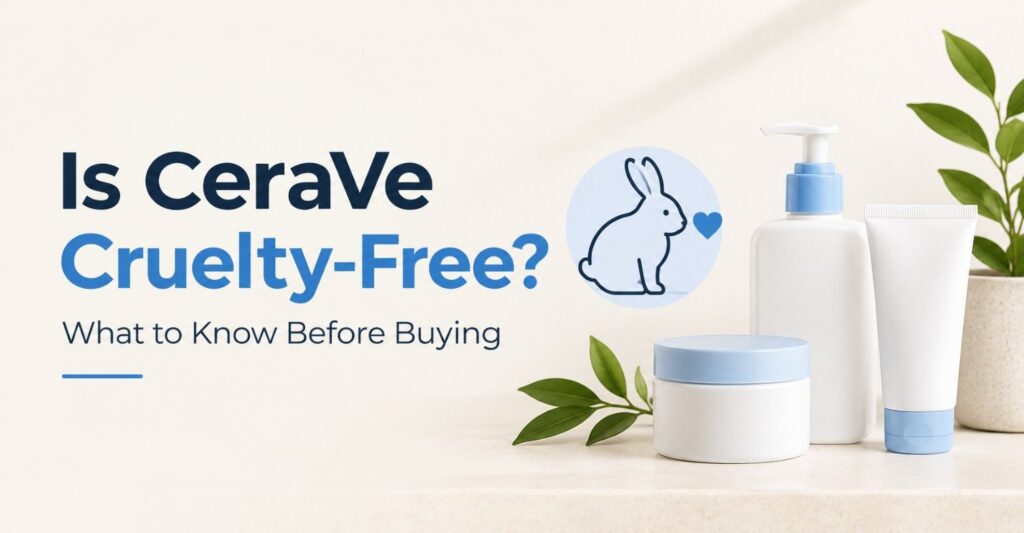
CeraVe is a popular skincare brand known for its cleansers, moisturizers, and ceramide-based formulas. Many people in the United States choose CeraVe for everyday skincare, but shoppers who care about animal welfare often ask an important question: Is CeraVe cruelty-free?
The answer requires a closer look at the brand’s own animal-testing policy and the standards used by independent cruelty-free organizations.
CeraVe states on its official website that its products are not tested on animals. However, the brand is not listed as cruelty-free in PETA’s Beauty Without Bunnies database. This difference matters if you want more than a company’s own statement when making purchasing decisions.
In this guide, we explain what CeraVe says about animal testing, why certification matters, whether cruelty-free means vegan, and how to find skincare products that better match your values.
Is CeraVe Cruelty-Free?
CeraVe is not currently recognized as cruelty-free by PETA’s Beauty Without Bunnies program. Although CeraVe states that it does not test its products on animals, PETA explains that the company has not signed the statement of assurance required to be included in its cruelty-free database.
These are two different positions:
- CeraVe’s statement: The brand says its products are not tested on animals.
- PETA’s listing: CeraVe has not met the requirements for inclusion in PETA’s cruelty-free database.
This distinction does not establish that every CeraVe product has been tested on animals. Instead, it means shoppers should not interpret the brand’s statement as equivalent to independent cruelty-free recognition.
If avoiding animal testing is important to you, consider the company’s complete policy, the standards of your preferred certification organization, and any exceptions that may apply.
You can review the brand’s own statement on the official CeraVe FAQ page and its status on PETA’s CeraVe company page.
What Does CeraVe Say About Animal Testing?
CeraVe’s official FAQ states that the brand does not test its products on animals. The company focuses on skincare products designed to cleanse, moisturize, and support the skin’s protective barrier.
For consumers, however, an animal-testing policy can involve more than finished products. It may also raise questions about ingredient suppliers, third-party testing, and testing conducted to meet certain regulatory requirements.
Before deciding whether a brand meets your personal definition of cruelty-free, consider these questions:
- Does the policy cover finished products and ingredients?
- Does it address ingredient suppliers and third-party manufacturers?
- Are there exceptions to the company’s animal-testing commitment?
- Does an independent organization verify the company’s practices?
- Does the company have a clear policy against future animal testing?
A brand may provide answers to some of these questions without addressing every detail. Reading the complete policy helps you make a more informed decision instead of relying on a short marketing statement.
Why Isn’t CeraVe on PETA’s Cruelty-Free List?
PETA maintains a database of companies that have made commitments regarding animal testing. Its CeraVe listing explains that the brand has not signed the organization’s statement of assurance required for inclusion.
This is an important distinction. A company’s absence from a particular database does not, by itself, prove that all its products are tested on animals. It means the company has not qualified for recognition under that organization’s requirements.
Independent organizations can use different criteria when assessing cruelty-free claims. For example, some programs require companies to address testing across their ingredient supply chains, while others have their own documentation and verification procedures.
If you want a recognized cruelty-free certification, check the relevant organization’s current database rather than relying only on packaging claims or social media posts.
You can also compare certification requirements through the Leaping Bunny program.
Is CeraVe Owned by a Company That Tests on Animals?
CeraVe is owned by L’Oréal, a global beauty company. L’Oréal states that it stopped testing its products on animals in 1989 and has developed alternative methods for assessing product safety. The company also discusses circumstances in which certain health authorities may require animal testing.
For shoppers who evaluate parent-company policies, this information may influence their decision.
Some consumers assess a brand based on its direct animal-testing policy. Others consider the practices of its parent company, ingredient suppliers, and wider business relationships.
There is no single personal purchasing rule that everyone follows. The important thing is to understand the available information and apply your chosen standard consistently.
For the most accurate details, consult current company policies and independent certification databases before purchasing.
Is CeraVe Vegan?
Cruelty-free and vegan are not the same thing.
Cruelty-free generally refers to a company’s animal-testing practices. Vegan skincare, on the other hand, avoids ingredients derived from animals.
Depending on the formulation, animal-derived ingredients can include beeswax, lanolin, carmine, or certain forms of collagen. Ingredient lists vary between products, so it is important not to assume that an entire range is vegan without checking.
A product can be vegan without having independent cruelty-free certification. Similarly, a brand may have an animal-testing policy while offering products containing animal-derived ingredients.
If you want to avoid both animal testing and animal-derived ingredients, check the individual product label and look for reliable certification or clear documentation.
Our guide on how to choose cruelty-free and vegan skincare products explains what to look for and how these two standards differ.
How to Check Whether a Skincare Brand Is Cruelty-Free
If you are comparing CeraVe with other skincare brands, these steps can help you evaluate their claims.
1. Check Independent Certification
Look for the brand in a recognized organization’s current database, such as Leaping Bunny or PETA’s Beauty Without Bunnies database.
Read the organization’s criteria instead of assuming all certifications mean exactly the same thing.
Also, verify the precise brand name. A company’s certification status should not automatically be extended to other brands owned by the same parent company.
2. Read the Official Animal-Testing Policy
Look for specific information about finished products, ingredients, suppliers, third-party testing, and potential exceptions.
A clear, detailed policy is more useful than a vague statement. If the information does not answer a question that matters to you, contact the company for clarification.
3. Consider the Parent Company
Check whether the brand belongs to a larger beauty or consumer-products company.
Decide whether your personal standard applies only to the brand you are buying or also to its parent company and wider business practices. This can help you compare brands more consistently.
4. Check Ingredients if You Want Vegan Skincare
Cruelty-free status does not guarantee a product is vegan. Review the ingredient list on the packaging or the manufacturer’s official product page.
If an ingredient’s source is unclear, ask the manufacturer rather than assuming it is plant-derived.
5. Verify the Information Before Buying
Company policies, product formulas, and certification listings can change. Check current sources when making a purchasing decision, particularly if cruelty-free or vegan status is a deciding factor.
What Are Some Alternatives to CeraVe?
If you prefer brands with clearer cruelty-free credentials, begin with independent certification databases and compare products that meet your requirements.
Our guide to the best cruelty-free skincare brands in 2026 can help you explore options and understand what to check before buying.
When comparing alternatives, consider more than the brand’s animal-testing policy. Think about your skin type, budget, product ingredients, and the concern you want to address.
For example, someone looking for a daily moisturizer may have different needs from someone shopping for an acne-focused cleanser or an anti-aging serum.
If fine lines and skin aging are your main concerns, explore our anti-aging skincare guide for more information about skincare choices and ingredients commonly used in anti-aging routines.
Remember that a cruelty-free label does not guarantee a product will suit every skin type. Choose a formula based on your individual needs, and introduce new products carefully if your skin is sensitive.
Can You Build a Skincare Routine Without CeraVe?
Yes. A practical skincare routine does not have to depend on a single brand.
A basic routine often includes:
- Gentle cleanser: Choose one that removes dirt, sunscreen, and excess oil without leaving your skin feeling uncomfortably tight.
- Moisturizer: Select a formula that suits your skin type and helps maintain hydration.
- Sunscreen: Use broad-spectrum sunscreen with SPF 30 or higher during the day, following the product’s directions.
- Targeted treatments: If needed, consider products formulated for concerns such as acne, uneven skin tone, or visible signs of aging.
You can build this routine using products from brands that meet your preferred cruelty-free and vegan standards.
If your goal is a hydrated, smooth-looking complexion, you may also enjoy our guide to what glass skin is and how to approach the skincare trend.
Keep your routine simple at first. Introduce new products one at a time, follow their directions, and stop using a product if it causes significant irritation.
Frequently Asked Questions
Final Verdict: Should You Buy CeraVe?
CeraVe may appeal to shoppers looking for everyday skincare products, but those who require independent cruelty-free recognition should review its status carefully before buying.
The brand says its products are not tested on animals, while PETA does not list CeraVe as cruelty-free under its program. Understanding this difference is more useful than relying on a simple yes-or-no label.
Ultimately, the decision depends on your personal standards. Review the available evidence, check current certification databases, and examine individual product ingredients if vegan skincare is also important to you.
At ScrollingZone, our goal is to help readers make informed skincare choices through clear explanations and practical research. By checking brand policies and understanding certification standards, you can choose products that better align with your skincare needs and personal values.
Editorial note: Brand policies and certification listings can change. Always consult the linked official sources for the latest information before making a purchase.