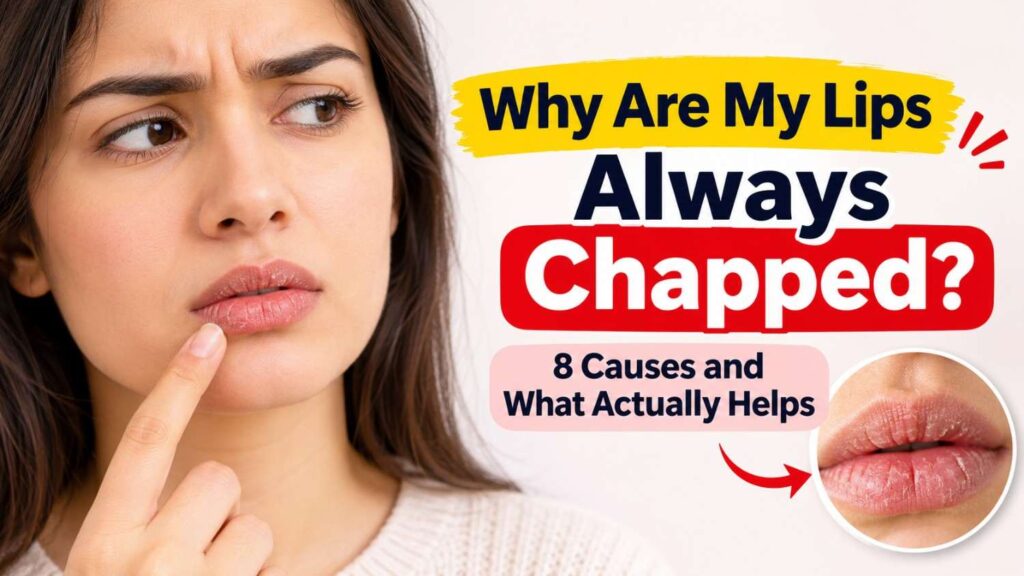
Do your lips feel dry, tight, flaky, or cracked even when you apply lip balm several times a day? You are not alone. Many people experience chapped lips throughout the year, especially during cold weather, in dry indoor environments, or after using certain lip-care products.
Occasional dryness is common, but lips that remain chapped for weeks may need more attention. Your lips have a delicate outer surface that loses moisture more easily than many other areas of your skin. Unlike most skin, the lip surface has a thinner protective barrier and lacks the same oil-producing structures found elsewhere.
The result? Wind, sunlight, saliva, irritating ingredients, and everyday habits can leave your lips feeling rough and uncomfortable.
The good news is that the right care routine can often improve ordinary chapped lips. However, the best treatment depends on what is causing the problem. A simple protective ointment may help weather-related dryness, while recurring inflammation, cracks at the corners of the mouth, or persistent sores may require a different approach.
What Are Chapped Lips?
Chapped lips are dry, flaky, rough, or cracked lips caused by irritation, moisture loss, or inflammation. Common symptoms include tightness, peeling skin, redness, tenderness, and small cracks that may sting when you eat or speak.
Mild cases often improve with gentle care and a protective lip ointment. However, persistent symptoms may be associated with allergic reactions, eczema, sun damage, medication effects, or other medical conditions.
8 Reasons Your Lips Are Always Chapped
Cold Weather, Wind, and Dry Indoor Air
Environmental conditions are among the most common causes of chapped lips. Cold temperatures, strong winds, and low humidity can increase moisture loss from the delicate surface of your lips.
Indoor heating can also make the air drier during winter. Even if you spend most of your day inside, your lips may become rough, tight, and flaky.
Signs this may be the cause:
- Your lips become worse during winter or windy weather.
- You notice dryness after spending time outdoors.
- Your lips feel tight after sitting in an air-conditioned or heated room.
- A protective ointment provides temporary relief.
What actually helps: Apply a plain, fragrance-free ointment containing petrolatum before going outside and again before bed. Reapply when needed, particularly after eating or drinking. If your indoor air is consistently dry, a clean humidifier may also help.
Avoid licking your lips for temporary relief. Saliva evaporates quickly and can leave your lips feeling even drier.
Frequently Licking, Biting, or Peeling Your Lips
Licking your lips can feel soothing when they are dry, but the relief usually does not last. As saliva evaporates, it can contribute to further dryness and irritation.
Repeated exposure to saliva may also inflame the skin around your mouth. This can create a cycle in which your lips feel dry, you lick them, they become more irritated, and you lick them again.
Biting or peeling away loose skin can make the problem worse by damaging the delicate surface. Picking at cracks may cause bleeding and delay healing.
Signs this may be the cause:
- You frequently lick your lips without realizing it.
- The skin around your lips looks red or irritated.
- Your lips sting after licking or peeling them.
- The dryness returns soon after you apply lip balm.
What actually helps: Keep a plain ointment nearby and apply it whenever you feel the urge to lick your lips. Try to notice when the habit happens, such as while working, studying, or feeling stressed.
Do not pull off peeling skin. Allow it to shed naturally while you protect the lips with a gentle ointment.
Dehydration or Not Drinking Enough Fluids
Dehydration may contribute to dry lips, especially when you lose more fluids than usual through sweating, exercise, hot weather, vomiting, or diarrhea.
However, chapped lips alone do not confirm dehydration. Environmental dryness, lip licking, and product irritation can cause similar symptoms even when you drink enough water.
Other possible signs of dehydration include:
- Increased thirst.
- Darker-than-usual urine.
- Urinating less frequently.
- Feeling lightheaded or unusually tired.
What actually helps: Drink fluids regularly according to your needs and increase intake when appropriate during heat or exercise. If you have been losing fluids because of vomiting or diarrhea, an appropriate oral rehydration solution may be useful.
Remember that drinking water does not replace external lip protection. If your lips are exposed to wind, cold air, or irritating products, you may still need a protective ointment.
Seek medical advice if you experience persistent dehydration symptoms or cannot keep fluids down.
Your Lip Balm, Lipstick, or Toothpaste May Be Irritating Your Lips
Sometimes the product you use to treat dry lips is contributing to the problem. Certain fragrances, flavors, preservatives, and other ingredients can irritate sensitive skin or trigger allergic contact cheilitis, an inflammatory reaction affecting the lips.
Ingredients such as menthol, camphor, phenol, fragrance, and strong flavoring agents may cause burning or irritation in some people. Some people also react to ingredients in lipstick, lip gloss, mouthwash, or toothpaste.
A product that produces a tingling or cooling sensation is not necessarily working better. If it makes your lips burn or sting, stop using it.
Signs your lip product may be the problem:
- Your lips became irritated after starting a new product.
- Burning, redness, or peeling occurs after application.
- Your lips improve when you stop using a particular balm or lipstick.
- Irritation extends to the skin around your mouth.
What actually helps: Temporarily simplify your routine. Choose a plain, fragrance-free ointment and stop products that appear to trigger symptoms. Consider whether a new toothpaste, mouthwash, lipstick, or lip treatment coincided with the irritation.
If the problem continues despite avoiding suspected products, a dermatologist may recommend further evaluation or patch testing to identify a contact allergy.
Sun Exposure and Sun-Damaged Lips
Your lips need sun protection just like the rest of your skin. Ultraviolet (UV) radiation can damage the delicate lip surface, particularly the lower lip, which is often exposed to sunlight.
Repeated sun exposure may contribute to persistent roughness, scaling, tenderness, and changes in lip texture. One condition associated with chronic sun damage is actinic cheilitis, which can cause rough or scaly patches that do not resolve like ordinary chapped lips.
Signs that deserve attention:
- Your lips frequently become dry after spending time outdoors.
- You notice a persistent rough or scaly patch.
- The border between your lip and surrounding skin looks less defined.
- A specific area repeatedly cracks or fails to heal.
What actually helps: Use a broad-spectrum lip balm labeled SPF 30 or higher when outdoors. Reapply according to the product directions, particularly after eating, drinking, swimming, or wiping your mouth. A hat with a brim can provide additional protection.
Do not assume a persistent rough patch is simply dryness. Arrange a medical evaluation if a lip lesion does not heal, repeatedly returns, bleeds, or changes in appearance.
Allergies, Eczema, or Contact Dermatitis
Chapped lips can sometimes be a sign of inflammation rather than simple moisture loss. Eczema and contact dermatitis may cause dryness, redness, scaling, itching, burning, and cracking.
Contact dermatitis happens when your skin reacts to an irritating substance or an allergen. Possible triggers include cosmetics, lip products, toothpaste, fragrances, and some ingredients in oral-care products.
People with sensitive skin or a history of eczema may be more prone to recurring irritation, although anyone can develop a reaction.
Signs this may be the cause:
- Your lips are itchy as well as dry.
- Redness or scaling extends beyond the lip line.
- Symptoms return after using a particular product.
- The inflammation persists even when the weather improves.
What actually helps: Stop suspected irritating products and use a simple protective ointment. Avoid adding several new skincare products at once, because doing so can make it harder to identify the trigger.
If the inflammation persists, a healthcare professional can assess whether eczema, an allergy, an infection, or another condition is responsible. Do not use prescription steroid creams on your lips without appropriate medical guidance.
Certain Vitamin or Mineral Deficiencies
Nutritional deficiencies can sometimes contribute to lip inflammation, especially when cracks repeatedly develop at the corners of the mouth. Low levels of iron and certain B vitamins, including riboflavin (vitamin B2), may be associated with these symptoms.
Cracking at the corners of the mouth is often called angular cheilitis. It can also be caused by saliva irritation, yeast or bacterial infections, dental factors, or other skin conditions.
It is important not to assume that every case of chapped lips means you have a vitamin deficiency. Dry lips alone are not enough to diagnose a nutritional problem.
When to consider getting checked:
- Cracks at the corners of your mouth keep returning.
- You also experience unusual fatigue or other unexplained symptoms.
- Your diet is restricted or you have a condition that affects nutrient absorption.
- The cracks do not improve with basic protective care.
What actually helps: Eat a balanced diet that includes appropriate sources of iron and B vitamins. If you suspect a deficiency, consult a healthcare professional about whether testing is needed.
Avoid taking high-dose vitamin or iron supplements without medical advice. Supplementation should address an identified need rather than replace a proper evaluation.
Medications or Underlying Health Conditions
Some medications can cause dryness of the lips or skin as a side effect. Certain acne treatments, including oral isotretinoin, are well known for causing significant lip dryness. Other medicines may contribute to dryness depending on the drug and the individual.
Persistent lip symptoms can also occur alongside skin conditions or other health problems. For example, recurring inflammation may be associated with eczema, while cracks at the corners of the mouth may have several possible causes.
Signs to pay attention to:
- Your lips became noticeably drier after starting a medication.
- Ordinary lip balm no longer provides enough relief.
- Your lips remain cracked despite avoiding common irritants.
- You have recurring sores, marked inflammation, or other unexplained symptoms.
What actually helps: Use a protective ointment frequently and discuss persistent dryness with the healthcare professional who prescribed your medication. They can help determine whether the medicine is responsible and recommend suitable management.
Do not stop a prescribed medication or change its dose on your own. Seek prompt care if you develop sudden swelling of the lips or tongue, difficulty breathing, or difficulty swallowing, as these may indicate a serious allergic reaction.
What Actually Helps Chapped Lips Heal?
The best treatment for chapped lips depends on what is causing the dryness. If cold weather or moisture loss is responsible, a protective ointment may be enough. If your lips are reacting to a cosmetic or affected by a skin condition, you may also need to remove the trigger or seek medical treatment.
Start with a simple routine rather than buying several lip-care products at once.
Best Lip Balm Ingredients for Dry, Cracked Lips
When choosing a lip balm for dry lips, look for ingredients that protect the skin, reduce moisture loss, or help soften rough areas.
| Ingredient | Main benefit |
| White petroleum jelly (petrolatum) | Creates a protective barrier that reduces moisture loss |
| Ceramides | Help support the skin’s protective barrier |
| Dimethicone | Helps protect and soften the skin |
| Mineral oil | Helps reduce moisture loss and soften dry lips |
| Shea butter | Helps condition and soften rough lips |
| Zinc oxide or titanium dioxide | Provide UV protection when formulated into a properly labeled sunscreen |
For severely dry or cracked lips, a thick ointment containing white petroleum jelly is often a good starting point. It is widely available in the United States, generally affordable, and does not require an elaborate skincare routine.
Ceramides and other moisturizing ingredients can also be useful, although the complete product formula matters. If you have sensitive lips, choose fragrance-free products and avoid ingredients that have previously caused irritation.
Pro tip: A simple ointment you tolerate well is often a better choice than a premium lip treatment containing multiple fragrances, flavors, or exfoliating ingredients.
Is Vaseline Better Than Regular Lip Balm?
Plain Vaseline, which contains petroleum jelly, can be particularly helpful when your lips are very dry, cracked, or irritated.
Many traditional lip balms contain a combination of moisturizing ingredients, waxes, oils, and protective agents. These can work well, too, provided they do not irritate your lips.
The main difference is that petroleum jelly creates an effective protective barrier that helps prevent moisture from escaping.
For nighttime use, plain petroleum jelly is a practical option. During the day, especially outdoors, choose a lip balm that provides broad-spectrum SPF 30 or higher.
You do not necessarily need to choose one product over the other. A plain ointment can be useful for healing, while an SPF lip balm provides essential daytime sun protection.
Ingredients to Avoid When Your Lips Are Chapped
Some ingredients may make irritated lips feel worse, particularly if you already have inflammation or a damaged protective barrier.
While your lips heal, consider avoiding:
- Menthol and camphor
- Fragrances and added flavors
- Peppermint and cinnamon flavorings
- Eucalyptus
- Phenol
- Salicylic acid
- Products that cause a burning, stinging, or tingling sensation
Lip scrubs and plumping glosses are also best avoided when your lips are cracked or inflamed.
Keep in mind that not every person reacts to the same ingredients. The goal is to identify and avoid your own triggers rather than assume that every ingredient on this list will cause a problem.
How to Get Rid of Chapped Lips: A Simple Daily Routine
If your lips are constantly dry, a consistent routine can help protect them while the skin recovers.
Morning Routine
Start your morning by applying a plain, fragrance-free lip ointment. If you are heading outdoors, use a broad-spectrum SPF 30+ lip balm.
If you notice that toothpaste leaves your lips irritated, rinse away any residue after brushing and consider whether a different formula may be better tolerated.
Daytime Lip Care
Reapply your lip ointment whenever your lips feel dry, particularly after eating or drinking.
When spending time outdoors, follow the sunscreen label for reapplication. In general, sunscreen needs to be reapplied approximately every two hours outdoors and after eating, drinking, or swimming.
Avoid licking your lips, pulling away loose skin, or using scrubs to remove flakes.
Nighttime Lip Care
Before bed, apply a generous layer of plain petroleum jelly to protect your lips overnight.
If your bedroom air is particularly dry, a clean humidifier may help improve your environment. If you regularly wake up with a dry mouth or lips, mention it to your healthcare professional, especially if you also experience nasal congestion or persistent mouth breathing.
How Long Does It Take for Chapped Lips to Heal?
Mild dryness may begin improving within a few days once you remove the trigger and protect your lips. More severe cracking may take longer.
Give consistent care a chance, but do not wait if you develop unusual swelling, severe pain, a persistent sore, or a rough patch that does not heal. If your lips have not improved after two to three weeks of appropriate care, arrange a medical evaluation.
Common Lip-Care Mistakes That Make Dry Lips Worse
Even a good lip balm may not help much if your daily habits continue to irritate your lips.
Peeling off loose skin
Pulling flakes away can cause bleeding and create new cracks. Let the skin shed naturally while you protect the area with a bland ointment.
Switching lip balms too frequently
Trying a new product every day makes it harder to identify the ingredient causing irritation. Keep your routine simple until your lips settle.
Exfoliating cracked lips
Sugar scrubs, brushes, and exfoliating acids can worsen inflammation. Avoid exfoliation while your lips are dry, painful, or peeling.
Ignoring sun protection
Moisturizing alone does not protect your lips from UV radiation. Use an SPF 30+ lip product when spending time outdoors.
Assuming that every case is dehydration
Drinking enough water is important, but allergies, medication effects, environmental exposure, and inflammatory skin conditions may require different solutions.
Using medicated creams without guidance
Steroid, antibiotic, and antifungal products treat different problems. Using the wrong treatment may delay healing or worsen certain conditions.
Ignoring recurring cracks at the corners of the mouth
Angular cheilitis may involve saliva irritation, infection, eczema, or other factors. If the corners repeatedly split or become inflamed, seek medical advice rather than relying on lip balm alone.
When Should You See a Doctor for Chapped Lips?
Occasional dry lips are common, but persistent or unusual symptoms should not be ignored.
Consider seeing a healthcare professional if:
- Your lips do not improve after two to three weeks of appropriate care.
- Your lips repeatedly crack, bleed, or develop painful sores.
- The corners of your mouth remain red, inflamed, or split.
- You notice a persistent rough patch, unusual thickening, or a sore that will not heal.
- Your lips become increasingly painful, hot, swollen, or crusted.
- You suspect an allergy, medication side effect, or nutritional deficiency.
A dermatologist can examine your lips, review your skincare products, and determine whether you need allergy testing, laboratory tests, or prescription treatment.
Important: Sudden swelling of the lips accompanied by difficulty breathing or swallowing can indicate a serious allergic reaction. Seek emergency medical help immediately.
Expert Tips for Healthier Lips
If you want to prevent chapped lips from repeatedly returning, focus on small habits that protect the skin every day.
- Keep a plain ointment nearby. Easy access makes it simpler to reapply when your lips feel dry.
- Protect your lips before going outdoors. Wind and sun exposure can worsen irritation, so apply suitable protection before heading out.
- Pay attention to product reactions. If a lip balm repeatedly causes burning or itching, stop using it.
- Check products that touch your lips. Toothpaste, mouthwash, cosmetics, and skincare products may contribute to irritation in sensitive individuals.
- Use SPF lip protection consistently. This is particularly important during outdoor activities.
- Track recurring symptoms. Note when dryness begins, which products you use, and whether the symptoms affect your entire lips or just the corners.
- Choose consistency over complexity. A simple routine is easier to maintain and makes it easier to identify potential triggers.
Frequently Asked Questions
How to Stop Your Lips From Getting Chapped Again
If you keep asking, “Why are my lips always chapped?”, the answer may be hiding in your daily habits, environment, or lip-care products.
Dry weather, sun exposure, frequent licking, irritating ingredients, allergies, medication side effects, and certain nutritional or medical conditions can all contribute to persistent lip dryness.
The best first step is to simplify your routine. Use a plain, fragrance-free ointment, protect your lips with SPF 30+ lip balm outdoors, and avoid licking, biting, or peeling away loose skin.
Pay attention to patterns, too. If your lips become irritated after using a particular product, stop using it. If the corners of your mouth repeatedly crack, or you notice a rough patch that does not heal, do not assume that regular lip balm will solve the problem.
Give consistent care a chance, but seek professional advice if your symptoms persist for two to three weeks or worsen sooner.