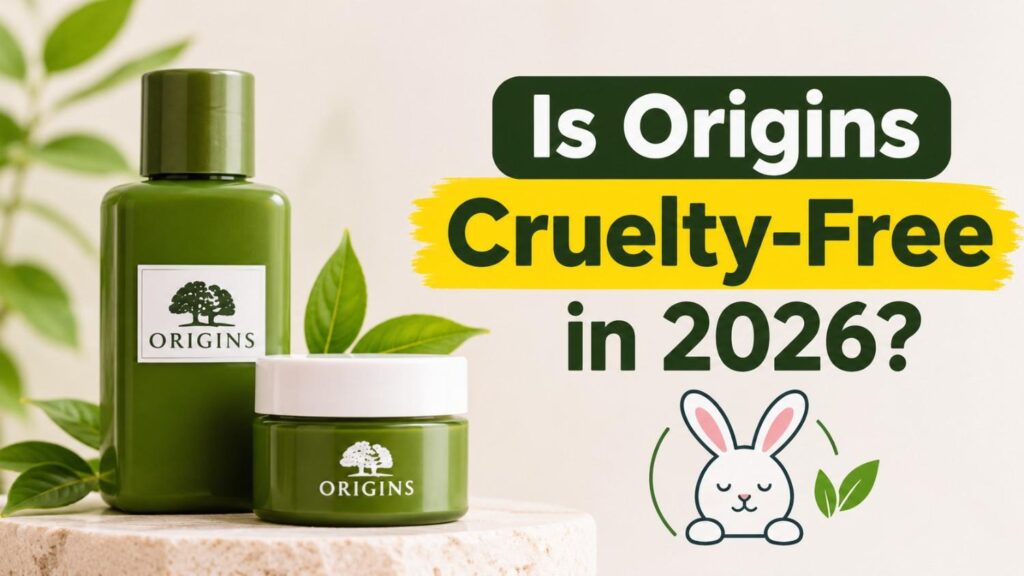
If you care about ethical beauty products, you may have wondered: Is Origins cruelty-free in 2026? Origins is known for botanical-inspired skincare, plant-derived ingredients, and products designed to support different skin concerns. However, a brand’s focus on nature does not automatically mean that it meets every cruelty-free standard.
Origins states on its official website that it does not test its products on animals and supports efforts to eliminate cosmetic animal testing worldwide. However, PETA lists Origins as not cruelty-free, citing concerns that may include testing conducted by suppliers or third parties and sales in regions where animal testing is legally required.
So, what does this mean for shoppers who want to make more ethical skincare choices?
In this guide, we will examine Origins’ animal-testing policy, its parent company’s position, the difference between cruelty-free and vegan skincare, and what to consider before buying its products.
Is Origins Cruelty-Free in 2026?
No, Origins is not recognized as cruelty-free by PETA as of this review. Although Origins states that it does not test on animals, PETA does not classify the brand as cruelty-free.
The difference comes down to how animal testing policies are evaluated. Some organizations assess a brand’s direct testing practices, while others also consider supplier testing, third-party testing, market availability, and exceptions involving local regulations.
Here is a quick overview:
| Question | Answer |
|---|---|
| Does Origins say it tests products on animals? | No. The brand says it does not test on animals. |
| Is Origins listed as cruelty-free by PETA? | No. PETA lists Origins as not cruelty-free. |
| Is Origins vegan? | Not all products are necessarily vegan; the brand describes its products as vegetarian. |
| Does Origins offer botanical-inspired skincare? | Yes, botanical ingredients are part of its brand identity. |
| Should cruelty-free shoppers check its policy? | Yes, particularly if they require independent cruelty-free recognition. |
These distinctions matter because a brand’s own statement and an independent organization’s classification may use different criteria.
For the most up-to-date information, review the official Origins skincare and testing policy and PETA’s Origins listing.
What Is Origins’ Official Animal Testing Policy?
Origins explains that it believes cosmetic animal testing is unnecessary and should be eliminated worldwide. The company says it does not test its products on animals and supports changes intended to reduce animal testing in countries where it may be required by law.
According to its published safety information, Origins evaluates ingredients and finished formulations using scientific safety assessments. Depending on the ingredient or formula, its approach may include laboratory methods that do not involve animals, computer-based models, and clinical testing involving volunteers.
These methods can help assess the safety of cosmetic products without relying on animal testing.
However, reading a brand’s policy requires looking beyond one sentence. Consumers may also want to understand how a company manages its supply chain, where products are sold, and whether independent cruelty-free organizations recognize the brand.
You can read the details directly on the Origins official website.
Why Does PETA Not Consider Origins Cruelty-Free?
PETA’s classification of Origins differs from the brand’s own statement.
PETA lists Origins under its not-cruelty-free category. Its explanation indicates that animal testing may occur directly, through suppliers, or through third parties, and that some brands may sell products in regions where testing is legally required.
This does not mean that every Origins product has been tested on animals. Rather, PETA’s classification reflects its assessment of the brand’s overall animal-testing status.
It is also important not to assume that the brand’s published policy and PETA’s classification are describing exactly the same practices or standards.
For consumers, the practical takeaway is simple: if you only purchase products from brands recognized as cruelty-free by PETA, Origins does not currently meet that requirement according to PETA’s listing.
You can verify the classification on PETA’s official Origins page.
Who Owns Origins Skincare?
Origins is part of The Estée Lauder Companies, a global beauty company with a portfolio of skincare, makeup, fragrance, and haircare brands.
The parent company says it does not test its products on animals or ask others to test on its behalf. It also acknowledges that some of its brands are sold in countries where animal testing on cosmetics or cosmetic ingredients may be required by law.
This qualification is important when evaluating the difference between a company’s general animal-testing statement and the status of a particular brand.
The Estée Lauder Companies also reports working with scientific organizations and industry groups to support alternatives to animal testing.
You can read its official animal-testing position for more details.
When assessing a skincare brand, it is helpful to examine the specific brand’s status rather than relying solely on its parent company’s overall statements.
Is Origins Vegan?
Origins describes its products as vegetarian, but that does not mean every product is vegan.
The brand explains that its vegetarian formulations may include cruelty-free honey and/or beeswax. These ingredients are animal-derived, which means a product containing either ingredient would not meet a strict vegan definition.
Cruelty-free and vegan are two different concepts:
- Cruelty-free: A product or brand meets the relevant animal-testing criteria.
- Vegan: A product contains no animal-derived ingredients according to the applicable definition.
- Vegetarian: A product avoids ingredients derived from animal slaughter but may still contain ingredients such as honey or beeswax.
A product can be vegan without coming from a brand recognized as cruelty-free. Similarly, a cruelty-free product may contain animal-derived ingredients.
If you follow a vegan skincare routine, check the ingredient list and the specific product’s claims before purchasing it. Do not assume that every product in a brand’s range has identical ingredients.
For more guidance, review the brand’s own ingredient and formulation information.
Are Origins Products Natural or Organic?
Origins is known for botanical-inspired formulations and ingredients associated with plants. However, the words natural, plant-based, and organic are not interchangeable.
A product can contain botanical extracts alongside synthetic ingredients. Likewise, a product that contains some organic ingredients is not necessarily entirely organic.
Origins states that select products contain USDA-certified organic ingredients, which are identified in the relevant ingredient information. The brand also explains that it uses synthetic ingredients when they are appropriate for product performance and formulation.
When shopping, consider the following:
- Read the full ingredient list for the specific product.
- Check whether an organic claim applies to the entire product or only selected ingredients.
- Look for relevant certification details when organic sourcing matters to you.
- Evaluate the formula based on your skin’s needs rather than relying on marketing terms alone.
Botanical ingredients can be useful components of skincare, but a botanical focus does not automatically establish that a product is vegan, cruelty-free, or suitable for sensitive skin.
Is Origins Good for Sensitive Skin?
Whether Origins is suitable for sensitive skin depends on the specific formula, your skin’s condition, and your individual sensitivities.
Some skincare products contain fragrance, botanical extracts, exfoliating ingredients, or other components that may irritate certain people. A product marketed with plant-based ingredients is not automatically gentle for every skin type.
If your skin frequently feels tight, itchy, red, or uncomfortable after using skincare products, consider simplifying your routine before introducing additional treatments.
Helpful steps include:
- Use a gentle cleanser and a moisturizer suited to your skin.
- Introduce new products one at a time.
- Patch-test products according to their directions.
- Avoid adding multiple exfoliating or active products at once.
- Stop using a product if it repeatedly causes irritation.
If you experience persistent burning, swelling, or a rash, seek medical advice rather than continuing to experiment with products.
You may also find these ScrollingZone guides useful:
- Face Burning After Skincare: Causes and What to Do
- How to Repair a Damaged Skin Barrier
- Cruelty-Free Skincare for Sensitive Skin
These articles can help you understand common skincare reactions and how to approach a gentler routine.
What Should You Look for in a Cruelty-Free Skincare Brand?
If avoiding animal testing is a priority, evaluate brands using clear and verifiable criteria instead of relying only on labels such as clean beauty or natural skincare.
1. Check independent cruelty-free recognition
Look for current listings from recognized organizations, such as PETA or Cruelty Free International’s Leaping Bunny program. Understand the criteria used by each organization because their assessments and certification requirements may differ.
2. Review the brand’s complete policy
Read what the company says about finished products, ingredients, suppliers, and third-party testing. Pay attention to exceptions and the language used in its policy.
3. Verify the specific product’s ingredients
If you also want vegan skincare, check for ingredients such as beeswax, honey, lanolin, or other animal-derived materials. Ingredient sources and formulations can vary, so verify the specific product rather than assuming the entire range is identical.
4. Avoid relying on a single marketing claim
Words such as botanical, plant-powered, green, and clean do not necessarily confirm a brand’s cruelty-free status. Look for evidence that directly addresses animal testing.
5. Recheck information before purchasing
Brand policies, product formulas, ownership details, and independent listings can change. Check current information before making a decision, particularly if you follow strict ethical purchasing standards.
Origins vs. Cruelty-Free Skincare: What Is the Difference?
The main difference is not necessarily the ingredients or the appearance of a product. It is whether the brand meets the animal-testing standards you personally follow.
Origins promotes botanical-inspired skincare and states that it does not test on animals. However, PETA does not recognize Origins as cruelty-free.
For comparison, shoppers can research brands that currently hold recognized cruelty-free certifications or appear on independent organizations’ approved lists. Always verify the latest listing and check individual product ingredients if vegan skincare is also important to you.
If you are exploring alternatives, ScrollingZone’s guide to the best cruelty-free skincare brands in 2026 is a useful starting point.
Rather than choosing a product solely because it is popular, select one that aligns with your ethical preferences, budget, and skin needs.
Frequently Asked Questions
Final Verdict: Should You Buy Origins in 2026?
Origins may appeal to shoppers interested in botanical-inspired skincare, but it is not a cruelty-free choice according to PETA’s current listing.
The brand states that it does not test on animals, while PETA takes a broader view of the company’s animal-testing status. Consumers should understand this distinction before deciding whether the brand fits their values.
If you require independent cruelty-free recognition, consider researching brands with current, verifiable approval from an organization whose criteria you trust. If vegan ingredients are also important, check each product’s ingredient list separately.
Ultimately, informed skincare shopping means looking beyond marketing claims and checking the evidence that matters to you.
Editorial note: This article reflects the brand policy and external listing reviewed for this guide. Animal-testing policies and certifications can change, so readers should consult the linked official sources for the latest information.
Sources
- Origins — Official Skincare and Safety Policy
- PETA — Origins Animal Testing Status
- The Estée Lauder Companies — Animal Testing Policy
This article is for general informational purposes and is not a substitute for professional dermatological advice.