
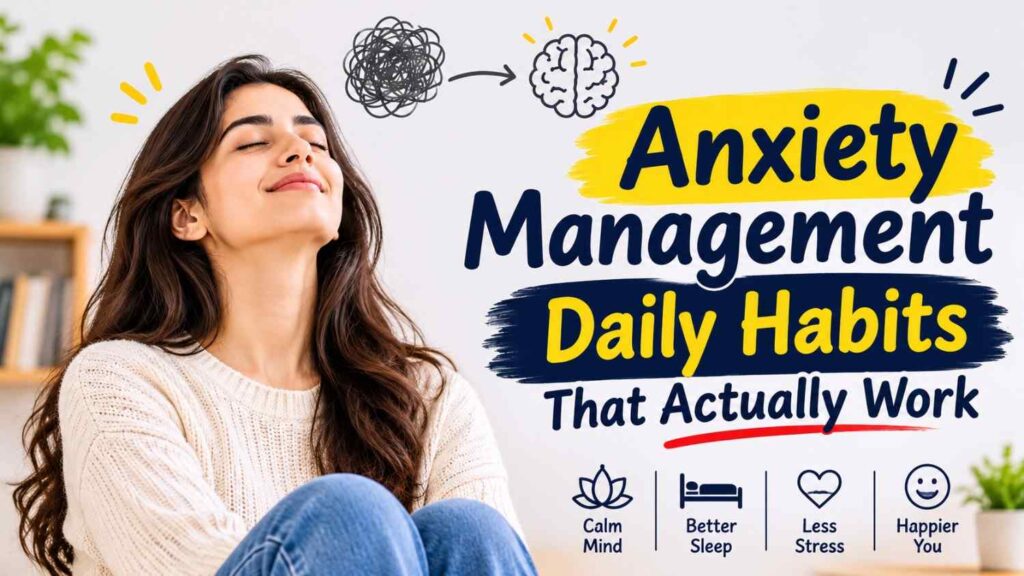
Do you ever feel like your mind refuses to slow down—even when everything around you seems calm?
You’re not alone.
Millions of Americans experience anxiety every day. Sometimes it’s a racing heart before an important meeting. Other times it’s constant overthinking, difficulty sleeping, or an overwhelming feeling that something bad might happen.
While medication and therapy can play an important role for many people, they’re not the only tools available. Research continues to show that small, consistent daily habits can make a meaningful difference in how your brain responds to stress.
The good news?
Managing anxiety doesn’t always require dramatic life changes. In fact, the most effective strategies are often surprisingly simple—taking a morning walk, getting enough sleep, practicing mindfulness for a few minutes, or learning healthier ways to respond to stressful situations.
In this guide, you’ll discover evidence-based daily habits that mental health professionals frequently recommend, understand why they work, and learn practical ways to incorporate them into your everyday life.
Whether you’re dealing with occasional stress or looking to build a healthier lifestyle for long-term emotional wellness, these habits can help you feel calmer, more focused, and more in control.
What Is Anxiety Management?
Anxiety management is the practice of using healthy strategies, daily habits, and coping techniques to reduce anxiety symptoms, improve emotional resilience, and maintain overall mental well-being. It focuses on managing stress effectively rather than eliminating anxiety, helping people respond more calmly to life’s challenges.
Understanding Anxiety
Anxiety is your body’s natural response to stress or perceived danger. It’s part of your survival system, preparing you to react quickly in threatening situations.
Occasional anxiety is completely normal. It can even be helpful by improving focus before an exam, job interview, or important presentation.
However, when anxiety becomes frequent, intense, or begins interfering with work, relationships, sleep, or daily activities, it deserves attention.
Common symptoms include:
- Excessive worrying
- Racing thoughts
- Difficulty concentrating
- Restlessness
- Muscle tension
- Fatigue
- Trouble sleeping
- Rapid heartbeat
- Digestive discomfort
- Feeling constantly “on edge”
The goal of anxiety management isn’t to eliminate every anxious feeling. Instead, it’s about developing healthier responses that reduce the intensity and frequency of anxiety over time.
Why Daily Habits Matter More Than Occasional Solutions
Many people search for a quick fix when anxiety strikes.
They look for instant calming techniques, supplements, or one-time solutions.
While these can provide temporary relief, lasting improvement usually comes from the small choices you make every day.
Think of your mental health like physical fitness.
Going to the gym once won’t transform your body—but exercising consistently over weeks and months can.
The same principle applies to your brain.
Healthy daily habits gradually reshape how your nervous system responds to stress.
Over time, these habits can help:
- Improve emotional resilience
- Lower stress hormone levels
- Support better sleep
- Increase energy
- Enhance focus
- Improve mood stability
- Reduce physical symptoms of anxiety
- Build healthier coping skills
Consistency matters far more than perfection.
Even five to ten minutes of healthy habits each day can add up to significant long-term benefits.
Common Signs Anxiety May Be Affecting Your Daily Life
Many people don’t realize that anxiety doesn’t always appear as panic attacks.
It often shows up in subtle ways that become part of everyday life.
Here are some common signs:
Emotional Symptoms
- Constant overthinking
- Feeling overwhelmed by small tasks
- Irritability
- Fear of making mistakes
- Difficulty relaxing
- Feeling emotionally exhausted
Physical Symptoms
- Tight shoulders or neck pain
- Headaches
- Rapid heartbeat
- Sweaty hands
- Digestive issues
- Fatigue despite sleeping enough
- Shallow breathing
- Muscle tension
Mental Symptoms
- Racing thoughts
- Difficulty focusing
- Brain fog
- Trouble making decisions
- Constant “what if” thinking
- Negative self-talk
Behavioral Symptoms
- Avoiding social situations
- Procrastination
- Constant reassurance seeking
- Excessive phone scrolling
- Nail biting
- Emotional eating
- Trouble completing daily tasks
If these symptoms persist or significantly interfere with daily life, it’s important to consider speaking with a licensed mental health professional. Daily habits can support well-being, but they are not a substitute for professional care when it’s needed.
The Science Behind Anxiety and Daily Habits
Understanding why healthy habits work can make it easier to stick with them.
Your brain is constantly adapting based on your daily experiences—a process known as neuroplasticity. This means the routines you repeat can gradually influence how your brain processes stress and emotions.
When you’re under chronic stress, your body releases hormones like cortisol and adrenaline more frequently. In the short term, these hormones help you respond to challenges. But when they remain elevated for long periods, they can contribute to persistent anxiety, poor sleep, difficulty concentrating, and physical tension.
Supportive daily habits help regulate this stress response by working through several pathways:
They Help Calm Your Nervous System
Practices such as deep breathing, mindfulness, and gentle movement activate the parasympathetic nervous system, often called the body’s “rest and digest” mode. This helps slow your heart rate, relax your muscles, and create a sense of calm.
They Improve Sleep Quality
Quality sleep plays a critical role in emotional regulation. Consistent sleep habits help your brain process emotions more effectively and reduce the likelihood of heightened anxiety the next day.
They Support Brain Health
Regular physical activity, balanced nutrition, and stress-management techniques can support healthy brain function and improve communication between areas involved in decision-making and emotional regulation.
They Build Emotional Resilience
Every healthy habit is like a small investment in your mental well-being. Over time, these repeated actions strengthen your ability to cope with everyday stress instead of feeling overwhelmed by it.
Why Small Changes Often Work Better Than Big Ones
One of the biggest misconceptions about anxiety management is that you need a complete lifestyle overhaul.
In reality, sustainable progress usually comes from small, repeatable actions.
For example:
- Taking a 10-minute walk after lunch
- Practicing five minutes of mindful breathing
- Going to bed at the same time each night
- Drinking water before reaching for another cup of coffee
- Writing down three things you’re grateful for before bed
These simple habits may seem minor on their own, but practiced consistently, they can create meaningful improvements in how you feel over time.
Start Your Day Without Your Phone
Many people reach for their phone within minutes of waking up. While it feels harmless, immediately checking emails, social media, or news can put your brain into “alert mode” before you’ve even started your day.
Why It Works
Your brain naturally experiences a rise in cortisol (often called the “awakening response”) during the first hour after waking. Flooding yourself with notifications during this period can amplify feelings of stress and anxiety.
Instead, Try This Morning Routine
- Drink a glass of water.
- Open the curtains and get natural sunlight.
- Stretch for five minutes.
- Take ten slow, deep breaths.
- Write one intention for the day.
- Wait 20–30 minutes before checking your phone.
Benefits
- Reduced morning stress
- Better focus
- Improved mood
- Less reactive thinking
Practice Deep Breathing Every Day
One of the fastest ways to calm your body is to control your breathing.
When you’re anxious, your breathing becomes shallow and rapid. Slow breathing signals your nervous system that you’re safe.
How to Reduce Anxiety with Deep Breathing
- Sit comfortably.
- Inhale through your nose for 4 seconds.
- Hold your breath for 4 seconds.
- Exhale slowly through your mouth for 6 seconds.
- Repeat for 5 minutes.
Popular Breathing Techniques
- Box Breathing (4-4-4-4)
- 4-7-8 Breathing
- Diaphragmatic Breathing
- Coherent Breathing
- Pursed-Lip Breathing
Benefits
Lowers heart rate
Relaxes muscles
Helps stop racing thoughts
Improves emotional regulation
Prioritize High-Quality Sleep
Poor sleep and anxiety often create a cycle: anxiety disrupts sleep, and lack of sleep makes anxiety feel worse.
Healthy Sleep Habits
- Go to bed at the same time every night.
- Wake up at a consistent time.
- Avoid caffeine late in the day.
- Limit screen time before bed.
- Keep your bedroom cool, quiet, and dark.
- Read a book instead of scrolling your phone.
Benefits
- Better emotional regulation
- Improved concentration
- More stable mood
- Lower stress levels
Practice Mindfulness
Mindfulness means paying attention to the present moment without judging it.
It doesn’t require emptying your mind—it means noticing your thoughts and gently bringing your attention back to the present.
Easy Mindfulness Activities
- Guided meditation
- Body scan meditation
- Mindful walking
- Mindful eating
- Five-minute breathing exercise
Benefits
- Less overthinking
- Better concentration
- Improved emotional awareness
- Reduced stress
Spend Time Outdoors
Nature has a calming effect on both the mind and body.
Even a short walk in a park or sitting outside for a few minutes can help you feel more grounded.
Ideas
- Walk in a local park.
- Eat lunch outside.
- Garden.
- Watch the sunrise or sunset.
- Hike on weekends.
Benefits
- Reduced stress
- Improved mood
- Better focus
- Increased physical activity
Common Mistakes People Make
Avoid these common pitfalls:
Trying to Fix Everything at Once
Changing every habit overnight often leads to burnout. Start with one or two habits and build from there.
Expecting Instant Results
Healthy routines usually take weeks—not days—to show noticeable benefits. Consistency matters more than speed.
Ignoring Sleep
Many people focus on meditation or supplements while overlooking sleep. Rest is one of the foundations of emotional well-being.
Drinking Too Much Caffeine
Large amounts of caffeine can increase jitteriness and make anxiety symptoms feel worse for some people.
Comparing Your Progress to Others
Everyone experiences anxiety differently. Focus on your own growth instead of measuring yourself against someone else’s journey.
Avoiding Difficult Feelings Completely
Trying to suppress anxiety can sometimes make it feel stronger. Healthy coping involves acknowledging emotions and responding to them constructively.
Comparison Table: Healthy Habits for Anxiety Management
| Habit | Time Needed | Best Benefit | Difficulty |
| Deep breathing | 5 minutes | Immediate relaxation | Easy |
| Walking | 20–30 minutes | Stress reduction | Easy |
| Mindfulness | 10 minutes | Better focus | Moderate |
| Journaling | 10 minutes | Reduced overthinking | Easy |
| Healthy eating | Daily | Stable mood and energy | Moderate |
| Sleep routine | Every night | Emotional regulation | Moderate |
| Outdoor time | 20 minutes | Improved mood | Easy |
| Social connection | Flexible | Emotional support | Easy |
| Digital detox | 30–60 minutes | Reduced mental overload | Moderate |
| Self-compassion | Ongoing | Increased resilience | Moderate |
Expert Tips for Long-Term Anxiety Management
Healthy habits become more effective when they’re realistic and consistent. These expert-backed strategies can help you build routines that last.
Start Small, Then Build Momentum
One of the biggest reasons people give up is trying to change everything at once.
Instead of overhauling your entire lifestyle, focus on one new habit each week.
For example:
- Week 1: Walk for 15 minutes daily.
- Week 2: Add five minutes of deep breathing.
- Week 3: Go to bed 30 minutes earlier.
- Week 4: Practice gratitude journaling.
Small wins build confidence and make healthy routines easier to maintain.
Create a Consistent Routine
Your brain thrives on predictability.
Try to wake up, eat meals, exercise, and go to bed at roughly the same time each day. A consistent routine helps regulate your body’s internal clock, supports better sleep, and can reduce everyday stress.
Identify Your Personal Triggers
Understanding what tends to increase your anxiety is an important step toward managing it.
Common triggers include:
- Work deadlines
- Financial concerns
- Relationship conflict
- Poor sleep
- Too much caffeine
- Constant social media use
- Major life changes
Keep a journal for a week and notice patterns. Awareness helps you prepare healthier responses.
Don’t Aim for “Perfect”
No one follows healthy habits perfectly every day.
Missing one workout or having a stressful day doesn’t erase your progress. Focus on consistency over perfection.
A helpful mindset is:
“Never miss twice.”
If you skip a healthy habit today, simply return to it tomorrow.
Celebrate Small Improvements
Many people only notice what isn’t working.
Instead, acknowledge progress like:
- Sleeping better
- Feeling calmer during stressful situations
- Worrying less often
- Recovering from anxiety more quickly
- Completing tasks with greater focus
Small improvements often add up to significant long-term change.
Frequently Asked Questions (FAQs)
Disclaimer
This article is intended for educational and informational purposes only and should not be considered medical advice. It is not a substitute for diagnosis, treatment, or personalized guidance from a qualified healthcare professional. If you experience severe, persistent, or worsening anxiety—or have thoughts of harming yourself or others—seek immediate help from a licensed healthcare provider or emergency services.