Losing weight does not mean you have to stay hungry all day or give up your favourite foods. In fact, choosing the right snacks can make a healthy eating routine easier to follow. The key is to select foods that provide protein, fibre, vitamins, minerals, and other essential nutrients without adding excessive calories to your daily diet.
If you often feel hungry between meals, choosing healthy snacks for fat loss can help you manage hunger and avoid reaching for highly processed foods. Options such as roasted chickpeas, Greek yogurt, fresh fruits, nuts, seeds, and vegetables can provide satisfying nutrition.
Many people believe that eating between meals automatically causes weight gain. However, snacking itself is not necessarily unhealthy. What matters is your food choice, portion size, and overall daily eating pattern.
Whether you are following a vegetarian diet, managing your weight after pregnancy, or simply trying to improve your eating habits, this guide will help you discover 20 nutritious snack ideas that are easy to prepare.
Why Choosing the Right Snacks Matters for Fat Loss
Snacks can play a useful role in a balanced eating routine. When you choose nutrient-rich foods, they can provide energy and help manage hunger between regular meals.
For example, a snack containing protein and fibre may feel more satisfying than a sugary snack that provides little nutritional value.
Here are some reasons to choose healthier snacks:
- Better hunger management: Protein and fibre can help you feel satisfied between meals.
- More nutrients: Fruits, vegetables, nuts, and seeds provide essential nutrients.
- Better food choices: Planning snacks can reduce the temptation to choose highly processed foods.
- Convenience: Many healthy snacks require very little preparation.
- Portion awareness: Preparing snacks in advance can make it easier to manage how much you eat.
If you are looking for a broader approach to healthy eating, read our guide on how to lose weight naturally, which covers sustainable lifestyle habits, physical activity, and balanced nutrition.
Remember, no individual snack directly burns body fat. Fat loss generally depends on your overall eating pattern, physical activity, sleep, and maintaining a sustainable calorie balance.
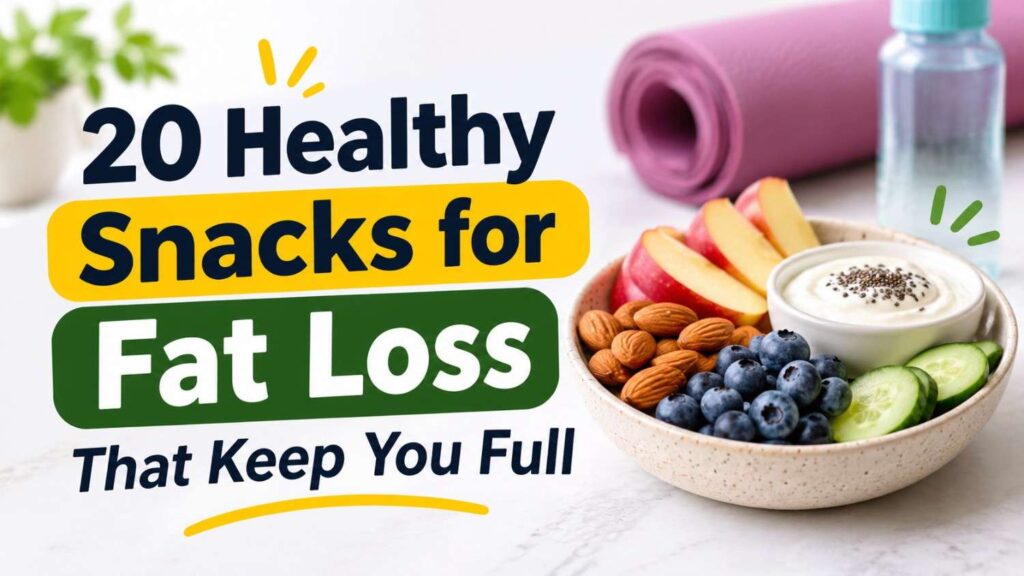
20 Healthy Snacks for Fat Loss That Keep You Full
Here are 20 practical snack ideas you can include in your daily routine. Choose options according to your hunger, preferences, dietary requirements, and daily calorie needs.
1. Greek Yogurt with Fresh Berries
Greek yogurt is a convenient source of protein, while berries provide fibre and naturally occurring sweetness.
You can combine plain, unsweetened Greek yogurt with strawberries, blueberries, or raspberries for a refreshing snack.
Suggested portion:
- 150–170 grams of plain Greek yogurt
- Half a cup of fresh berries
Why it can help: Protein contributes to fullness, while berries add fibre and variety to your diet.
Tip: Choose plain yogurt instead of flavoured varieties with added sugar.
2. Apple Slices with Peanut Butter
Apples are rich in fibre and provide a naturally sweet taste. Peanut butter adds protein and healthy unsaturated fats.
Together, they create a simple snack with different textures and flavours.
Suggested portion:
- One medium apple
- One tablespoon of natural peanut butter
Why it can help: The combination of fruit, fibre, and fat makes this snack more satisfying than eating a sweet treat alone.
Tip: Select peanut butter without unnecessary added sugar and keep the portion controlled.
3. Roasted Chickpeas (Roasted Chana)
Roasted chana is one of the easiest and most affordable healthy snacks for fat loss, especially for people who prefer Indian foods.
Chickpeas provide plant-based protein and dietary fibre. They are also easy to carry to work or college.
Suggested portion:
- Approximately 30 grams of roasted chana
Why it can help: Protein and fibre make roasted chickpeas a filling alternative to many fried packaged snacks.
Tip: Choose lightly salted or homemade roasted chana rather than heavily salted varieties.
4. Boiled Eggs
Eggs are a convenient source of high-quality protein and contain several important nutrients.
Boiled eggs require minimal preparation and can be eaten at home, at work, or after a workout.
Suggested portion:
- One or two boiled eggs, depending on your dietary needs
Why it can help: Protein-rich foods can support fullness and help you meet your daily protein requirements.
Tip: Add black pepper, lemon, or a little seasoning instead of using excessive salt.
5. Cucumber and Carrot Sticks with Hummus
If you enjoy crunchy snacks, cucumber and carrot sticks with hummus are worth trying.
Cucumbers and carrots provide water and fibre, while hummus made from chickpeas and tahini contributes protein and healthy fats.
Suggested portion:
- One cup of sliced vegetables
- Two tablespoons of hummus
Why it can help: This combination offers different nutrients and textures while making vegetables more enjoyable.
Tip: Prepare vegetable sticks in advance so they are ready whenever you feel hungry.
6. Roasted Makhana (Fox Nuts)
Makhana is a popular Indian snack that can be prepared quickly at home.
You can roast fox nuts in a small amount of oil or ghee and add black pepper, turmeric, or other spices.
Suggested portion:
- Around 20–25 grams of makhana
Why it can help: It provides a crunchy alternative to many fried snacks and can fit into a balanced eating plan.
Tip: Avoid adding excessive ghee, butter, or salt.
7. Cottage Cheese or Paneer Cubes
Paneer is a useful vegetarian protein option. It also provides calcium and other nutrients.
You can enjoy fresh paneer cubes with black pepper, lemon juice, and chopped vegetables.
Suggested portion:
- Around 75–100 grams of paneer
Why it can help: Its protein content can make it a satisfying snack between meals.
Tip: If you are watching your calorie intake, compare the nutrition labels of different paneer varieties and choose a portion that suits your needs.
8. Fresh Guava
Guava is an affordable fruit that provides dietary fibre and vitamin C.
It is easy to prepare and does not require cooking. Simply wash it, slice it, and enjoy.
Suggested portion:
- One small or medium guava
Why it can help: Fibre-rich fruits can contribute to fullness and support digestive health.
Tip: Enjoy fresh guava instead of choosing fruit-based drinks with added sugar.
9. Almonds and Walnuts
Nuts contain healthy fats, plant-based protein, fibre, and several essential nutrients.
Almonds and walnuts are convenient options when you need a quick snack outside your home.
Suggested portion:
- Approximately 15–20 grams of mixed nuts
Why it can help: Nuts can be satisfying in small quantities because they contain a combination of fat, protein, and fibre.
Tip: Nuts are energy-dense, so avoid eating directly from a large packet. Measure a small serving first.
10. Sprouted Moong Salad
Sprouted moong salad is a nutritious Indian snack that is easy to customise.
Combine properly prepared moong sprouts with cucumber, tomatoes, onions, coriander, and lemon juice.
Suggested portion:
- One small bowl of prepared sprouts salad
Why it can help: Moong provides plant-based protein and fibre, while vegetables add volume and nutrients.
Tip: For food safety, cook sprouts thoroughly rather than eating raw sprouts, particularly if you are pregnant, elderly, or have a weakened immune system.
11. Oatmeal with Cinnamon
Oats are a source of soluble fibre, including beta-glucan. They can make a warm and comforting snack.
Prepare a small bowl using oats and milk or an unsweetened fortified alternative. Add cinnamon for flavour.
Suggested portion:
- Around 30 grams of dry oats
- A small serving of milk
Why it can help: Oats provide fibre and can make a snack more satisfying.
Tip: Avoid adding large amounts of sugar, flavoured syrups, or sweetened toppings.
12. Air-Popped Popcorn
You do not always need complicated recipes to enjoy a healthier snack.
Plain air-popped popcorn is a whole-grain option that provides fibre. It can be a useful alternative when you crave something crunchy.
Suggested portion:
- Around three cups of air-popped popcorn
Why it can help: Its volume and fibre content can make it a satisfying snack.
Tip: Limit excessive butter, caramel, cheese flavouring, and added salt.
13. Banana with Peanut Butter
Bananas provide carbohydrates, potassium, and fibre. Peanut butter adds fat and some protein.
This combination can be especially convenient before physical activity when you need something quick to eat.
Suggested portion:
- One small banana
- One teaspoon to one tablespoon of peanut butter
Why it can help: It provides a combination of carbohydrates and fats that can help satisfy hunger.
Tip: Adjust the peanut butter portion according to your daily energy needs.
14. Edamame
Edamame refers to young soybeans that are usually served steamed.
It is a useful plant-based snack because soybeans provide protein and fibre.
Suggested portion:
- Around half a cup of cooked, shelled edamame
Why it can help: Its protein and fibre content can help make it more satisfying than many low-protein snacks.
Tip: Add lemon, black pepper, or mild spices for flavour.
15. Cottage Cheese with Fresh Fruit
Cottage cheese combined with fresh fruit creates a simple balance of protein and fibre.
You can add strawberries, apple pieces, or a small amount of other seasonal fruit.
Suggested portion:
- Half a cup of cottage cheese
- Half a cup of chopped fruit
Why it can help: The protein in cottage cheese and fibre from fruit can help you feel satisfied.
Tip: Check the nutrition label for added salt and choose a variety that fits your dietary preferences.
16. Homemade Trail Mix
Trail mix is easy to prepare and convenient for travelling.
Combine almonds, walnuts, pumpkin seeds, sunflower seeds, and a small amount of unsweetened dried fruit.
Suggested portion:
- Around 25–30 grams
Why it can help: Nuts and seeds provide healthy fats, protein, fibre, and several micronutrients.
Tip: Avoid commercial trail mixes that contain large amounts of chocolate, added sugar, or sweetened dried fruit.
17. Whole-Grain Toast with Avocado
Avocado contains fibre and predominantly unsaturated fats. Whole-grain bread adds carbohydrates and additional fibre.
Spread a thin layer of mashed avocado over one slice of whole-grain toast.
Suggested portion:
- One slice of whole-grain bread
- Around one-quarter of a medium avocado
Why it can help: The combination provides fibre and fats that can make a snack more satisfying.
Tip: Add lemon juice, black pepper, and tomato slices for extra flavour.
18. Homemade Buttermilk (Chaas)
Plain homemade buttermilk is a refreshing drink, especially in warmer weather.
Prepare it using plain curd, water, roasted cumin, coriander, and a small amount of salt.
Suggested portion:
- One glass of homemade buttermilk
Why it can help: It provides hydration and can contribute some protein and calcium, depending on how it is prepared.
Tip: Avoid adding excessive salt or sugar. Choose a preparation that suits your digestion and dietary needs.
19. Sweet Potato Chaat
Sweet potatoes provide carbohydrates, fibre, and several vitamins and minerals.
Boil or steam a small sweet potato, cut it into pieces, and add lemon juice, coriander, and mild spices.
Suggested portion:
- One small sweet potato
Why it can help: It is a nutrient-rich alternative to many fried potato snacks.
Tip: Prefer boiled or roasted sweet potato over deep-fried preparations.
20. Pumpkin Seeds
Pumpkin seeds are small but nutrient-dense. They contain plant-based protein, unsaturated fats, magnesium, and other nutrients.
You can enjoy them alone or add a small quantity to yogurt or homemade trail mix.
Suggested portion:
- Around 15–20 grams
Why it can help: Their protein, fibre, and fat content can contribute to a satisfying snack.
Tip: Choose unsalted or lightly salted seeds and measure your portion before eating.
Best High-Protein Snacks for Fat Loss
Protein is an important part of a balanced diet. It supports muscle maintenance and several essential body functions.
If you are trying to manage your weight while staying active, adding protein-rich snacks may help you feel satisfied between meals.
Here are some convenient options:
| Snack | Main Nutritional Benefit |
|---|---|
| Greek yogurt | Protein and calcium |
| Boiled eggs | High-quality protein |
| Roasted chana | Plant protein and fibre |
| Paneer | Protein and calcium |
| Edamame | Plant protein and fibre |
| Cottage cheese | Protein |
| Sprouted moong | Plant protein and fibre |
| Pumpkin seeds | Protein and healthy fats |
Vegetarians can combine different sources such as lentils, beans, soy, dairy, nuts, and seeds to include a variety of nutrients in their diet.
Women managing PCOS may also benefit from paying attention to balanced meals, fibre, and protein. For more condition-specific information, read our PCOS weight loss diet plan for women.
Individual dietary needs vary, so a personalised nutrition plan may be helpful for women with PCOS.
Best Evening Snacks for Weight Loss
Evening hunger is common, particularly when there is a long gap between lunch and dinner.
Instead of skipping food and becoming extremely hungry later, you can choose a balanced evening snack.
Some easy options include:
- Roasted chana with unsweetened tea.
- One small bowl of sprouts salad.
- Plain Greek yogurt with berries.
- Roasted makhana with mild spices.
- Cucumber and carrot sticks with hummus.
- One small fruit with a few almonds.
- Homemade buttermilk with a small serving of roasted chana.
Choose one option based on your hunger rather than eating all of them together.
Healthy Snacks for Women During Menopause
Menopause can bring changes in appetite, sleep, body composition, and fat distribution. Some women notice that managing their weight becomes more challenging during this stage.
Choosing balanced snacks with protein, fibre, and essential nutrients can help support a healthy eating routine.
Some suitable options include:
- Plain Greek yogurt with berries.
- Almonds and walnuts in measured portions.
- Roasted chickpeas.
- Fresh fruit with unsweetened yogurt.
- Vegetable sticks with hummus.
- Pumpkin seeds.
If you are experiencing changes in abdominal fat during menopause, you can also explore our detailed guide on foods to avoid for menopause belly fat.
That article discusses common dietary patterns, food choices, and practical alternatives that may support healthy weight management during menopause.
Remember that no specific food can target belly fat. A balanced diet, regular physical activity, sleep, and individual health factors all play a role.
How to Make Healthy Snacks More Filling
Choosing nutritious foods is important, but how you combine and eat them also matters.
Here are some practical tips to make your snacks more satisfying.
1. Combine Protein with Fibre
Try pairing protein-rich foods with fibre-containing foods.
For example:
- Yogurt with berries.
- Apple with peanut butter.
- Roasted chana with cucumber.
- Whole-grain toast with paneer.
These combinations provide different nutrients and may help you feel satisfied for longer.
2. Watch Your Portion Sizes
Even nutritious foods can contribute a significant amount of energy when eaten in large quantities.
This is particularly important for nuts, seeds, peanut butter, avocado, and trail mix.
Use a small bowl or container instead of eating directly from a large packet.
3. Choose Whole Foods More Often
Fresh fruits, vegetables, legumes, plain dairy products, nuts, and whole grains are useful choices.
Try to limit snacks that regularly contain excessive added sugar, sodium, and saturated fat.
4. Plan Your Snacks in Advance
Preparing snacks ahead of time can make healthy eating more convenient.
You can wash and cut vegetables, prepare roasted chickpeas, portion nuts, or keep plain yogurt in the refrigerator.
5. Eat Mindfully
Avoid eating directly from packets while watching television or working.
Sit down, serve an appropriate portion, and pay attention to your hunger and fullness.
6. Drink Enough Water
Sometimes thirst can be confused with hunger. Keep water available throughout the day and maintain good hydration.
Water is important for general health, although drinking extra water alone does not cause body fat loss.
Healthy Snacks for Fat Loss: What Should You Avoid?
You do not need to completely eliminate your favourite foods to manage your weight. However, making certain snacks occasional choices rather than everyday habits may help.
Consider limiting:
- Deep-fried packaged snacks.
- Sugar-coated cereals and snack bars.
- Biscuits and cookies with high added sugar.
- Sugary soft drinks and packaged fruit beverages.
- Large portions of flavoured chips.
- Sweetened yogurt and desserts.
- Excessively salted nuts and packaged mixtures.
The goal is not to follow a perfect diet every day. It is to develop eating habits that are nutritious, realistic, and sustainable.
For a more structured approach to meals, see our weight loss diet chart for female. It covers meal planning, food choices, and practical Indian diet ideas for women.
Sample One-Day Healthy Snacking Plan
If you are unsure how to include snacks in your routine, here is a simple example.
| Time | Snack Idea |
|---|---|
| Mid-morning | One medium guava |
| Afternoon | Plain yogurt with berries |
| Evening | Roasted chana |
| After physical activity, if hungry | Milk or a protein-rich snack |
This is only an example, not a personalised diet plan. Your snack requirements depend on your age, activity level, health, appetite, and overall meals.
You do not have to eat snacks at every listed time. Eat when you are genuinely hungry and when a snack fits your routine.
Common Mistakes People Make When Choosing Weight-Loss Snacks
Even people who make an effort to eat healthy can develop habits that make their eating routine less balanced.
Watch out for these common mistakes:
1. Eating Too Many Healthy Snacks
Nuts, seeds, peanut butter, and avocado are nutritious, but their portions still matter.
2. Choosing Products Just Because They Say Diet or Low-Fat
Marketing labels do not automatically mean a product is nutritious. Check the ingredient list and nutrition information.
3. Skipping Meals and Depending Only on Snacks
Snacks should complement balanced meals, not replace all the nutrients you need from your regular diet.
4. Drinking Sugary Smoothies Instead of Eating Whole Fruits
Some smoothies contain large quantities of fruit juice, syrups, and added sugars. Prefer whole fruits more often and be mindful of what goes into homemade smoothies.
5. Expecting One Food to Burn Belly Fat
No particular snack can target belly fat or guarantee weight loss. Overall lifestyle habits matter much more.
Frequently Asked Questions (FAQs)
Final Thoughts
Choosing the right snacks can make your weight-management journey more comfortable and sustainable. You do not need expensive diet products or complicated recipes to eat better.
Simple options such as roasted chana, Greek yogurt, boiled eggs, guava, makhana, sprouts, nuts, and fresh vegetables can all fit into a balanced eating routine.
The most important thing is to focus on variety, appropriate portions, protein, fibre, and consistency.
Start with two or three snacks you genuinely enjoy and gradually build a routine that works with your lifestyle. Remember, healthy weight management is about developing long-term habits rather than searching for a quick fix.
Medical Disclaimer: This article is intended for general educational purposes only and does not replace professional medical or nutritional advice. Individual dietary needs vary. People with diabetes, kidney disease, food allergies, digestive conditions, or other medical concerns should consult a qualified healthcare professional or registered dietitian before making significant dietary changes.
About ScrollingZone
At ScrollingZone, we share practical information about health, wellness, nutrition, fitness, and everyday self-care to help readers make more informed lifestyle choices.