
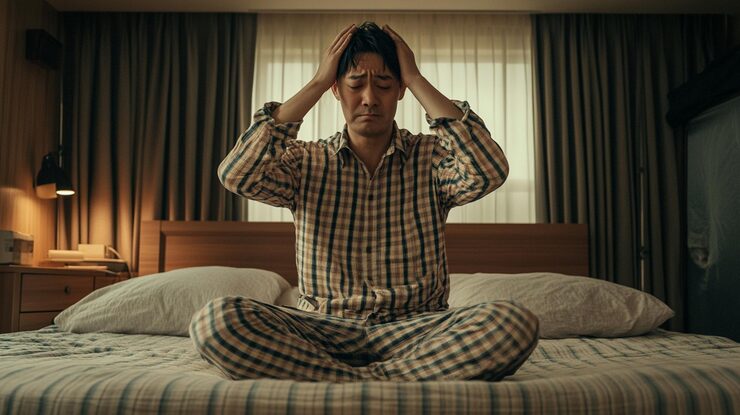
Have you ever opened your eyes in the morning and immediately felt nervous, worried, or uneasy?
Maybe your heart feels like it is beating faster than usual. Your mind starts racing. You feel a strange sense of dread, even though nothing bad has actually happened. Sometimes you may not even know what you are worried about.
This can leave you wondering, “Why do I wake up with anxiety for no reason?”
Waking up anxious can happen for many reasons, including stress, poor sleep, overthinking, work pressure, lifestyle habits, and ongoing anxiety. Sometimes the trigger is obvious, while other times it can seem to come out of nowhere.
Morning anxiety can also become part of a cycle. Stress can affect your sleep, poor sleep can make you feel more emotionally sensitive, and that can make anxiety feel stronger when you wake up.
In this article, we’ll look at the possible reasons behind waking up with anxiety, why you may feel nervous or worried in the morning, and practical ways to make your mornings calmer.
What Does Waking Up With Anxiety Feel Like?
Anxiety does not always begin with a clear thought such as “I am worried about work.”
Sometimes your body seems to react first.
You may wake up with:
- A racing or pounding heart
- Nervousness
- Racing thoughts
- Tightness in your chest
- An upset stomach
- Sweating
- Shaking
- Restlessness
- A feeling that something is wrong
- Difficulty getting out of bed
- Fear about the day ahead
- Constant worrying
- Trouble concentrating
For some people, the feeling disappears after a few minutes. For others, it stays for hours.
You may also notice that your anxiety is strongest immediately after waking but becomes easier to manage later in the day.
It can be especially confusing when you cannot find an obvious reason for the feeling.
Why Do I Wake Up With Anxiety for No Reason?
There may actually be a reason—you simply may not be aware of it yet.
Anxiety can be influenced by your sleep quality, stress levels, thought patterns, daily routine, relationships, work environment, and overall mental well-being.
Here are some common possibilities.
1. Stress From the Previous Day Is Still With You
One of the simplest explanations for waking up nervous anxiety is unresolved stress.
Imagine you had a stressful day at work.
You came home, had dinner, watched something, checked your phone, and eventually went to bed. You may have thought that you were done thinking about the problem.
But your mind may still be processing it.
You could wake up the next morning and immediately remember:
“Did my boss reply?”
“What if I make a mistake today?”
“I still haven’t solved that problem.”
“I have too much to do.”
Those thoughts can quickly create an anxious state.
Work-related stress is particularly important because people often carry workplace worries home without realizing it. If your job is a major source of stress, our guide on workplace anxiety symptoms, causes, and how to cope may help you understand the pattern more clearly.
2. Poor Sleep Can Make Morning Anxiety Worse
Sleep and anxiety are closely connected.
If you did not sleep well, your morning may start with tiredness, irritability, poor concentration, and lower emotional resilience. Even ordinary problems can feel much bigger when you are exhausted.
You may also experience a cycle like this:
Anxiety → poor sleep → tiredness → more anxiety → another difficult night
This is why simply asking, “Why am I anxious this morning?” may not be enough. It can be useful to ask:
“How well have I been sleeping lately?”
Think about whether you:
- Wake up repeatedly during the night
- Sleep at inconsistent times
- Stay on your phone late at night
- Have difficulty falling asleep
- Wake up much earlier than planned
- Feel tired despite sleeping
If you regularly feel exhausted even after spending enough time in bed, our article on why you are always tired can help you explore other possible reasons.
And when sleep itself becomes difficult, you may also benefit from understanding why you can’t sleep even when you’re tired.
3. Your Mind Starts Worrying About the Day Ahead
Have you ever woken up and immediately started thinking about everything you need to do?
That can happen before you even get out of bed.
Your brain may instantly create a mental checklist:
- Work
- Meetings
- Bills
- Emails
- Family responsibilities
- Appointments
- Deadlines
- Social situations
This can turn a normal morning into a stressful one.
This is often called anticipatory worry—the tendency to mentally experience a future problem before it actually happens.
Instead of enjoying the first few minutes of the morning, you are already trying to solve problems that have not happened yet.
That can explain why you are waking up worried even when nothing is immediately wrong.
4. You May Be Overthinking Before Bed
The way you spend the last hour of your day can influence how you feel the next morning.
Suppose you lie in bed replaying a conversation from the day.
“What did they mean by that?”
“Did I say something wrong?”
“What if tomorrow goes badly?”
“What if I can’t handle everything?”
The body may be resting, but the mind is still working.
Over time, this kind of repetitive thinking can become a habit.
If you frequently replay conversations, imagine worst-case scenarios, or struggle to switch your thoughts off, read our guide on why you overthink everything.
Learning to recognize overthinking patterns can be an important part of reducing morning anxiety.
5. You May Already Be Experiencing Morning Anxiety
Sometimes the answer is simply that you are experiencing a recurring pattern of anxiety shortly after waking.
Morning anxiety is not necessarily a separate mental health disorder. It is a way of describing anxiety that feels particularly strong in the morning.
You may wake up with:
- Nervousness
- Fear
- Racing thoughts
- Physical tension
- A feeling of dread
- Excessive worry
- Trouble relaxing
The important thing is to look at how often it happens and how strongly it affects your life.
For a deeper look at this pattern, see our complete guide to morning anxiety, its causes, symptoms, and ways to manage it.
6. Work Stress May Be Following You Into the Morning
For some people, work is the first thought of the day.
Before they even get out of bed, they are thinking about their inbox, deadlines, difficult coworkers, meetings, performance, or job security.
If that sounds familiar, morning anxiety may be connected to workplace stress rather than the morning itself.
You may notice that your anxiety becomes particularly strong on:
- Monday mornings
- Days with important meetings
- Presentation days
- Performance review periods
- Busy work seasons
- Days when you have to deal with a difficult person
Notice whether your morning anxiety follows a predictable pattern.
If it becomes significantly worse on working days, that is a useful clue.
Again, our detailed article on workplace anxiety symptoms, causes, and how to cope is a useful next read.
7. Emotional Exhaustion Can Make You Wake Up Drained and Anxious
Not all stress feels like panic.
Sometimes it feels like emotional exhaustion.
You may wake up thinking:
“I don’t want to deal with today.”
“I am already exhausted.”
“I just need another few hours.”
This may happen when you have been emotionally overwhelmed for a long time.
Emotional exhaustion can develop when your mind feels like it has been dealing with too many demands for too long.
You may notice:
- Low motivation
- Irritability
- Feeling mentally drained
- Difficulty concentrating
- Reduced patience
- Feeling overwhelmed by small tasks
- Wanting to withdraw from responsibilities
If this describes your mornings, take a look at our article on emotional exhaustion and the signs that you may be mentally drained from work.
This is especially relevant when morning anxiety appears alongside long-term work stress.
8. Social Anxiety Can Affect How You Feel After Waking Up
Morning anxiety is not always about work or personal responsibilities.
For someone who experiences social anxiety, simply thinking about upcoming interactions can trigger nervousness.
You may worry about:
- Talking to coworkers
- Meeting new people
- Making phone calls
- Going to social events
- Being judged
- Saying the wrong thing
- Being embarrassed
You might wake up nervous because your brain is already preparing for an interaction later that day.
It is also important to understand the difference between ordinary shyness and social anxiety.
Our guide on social anxiety vs. shyness can help explain how the two experiences differ.
9. Cortisol and Your Morning Stress Response
You may have heard people say that cortisol is responsible for morning anxiety.
There is an important distinction here.
Cortisol is a normal hormone that plays an important role in the body’s daily rhythm. Your cortisol levels naturally change throughout the day, including around the time you wake up.
That does not mean that morning anxiety automatically means you have “high cortisol.”
Anxiety is much more complicated.
However, if you are already stressed or sleeping poorly, normal morning changes in alertness and body activation may feel uncomfortable.
This is why you may wake up with a combination of:
- Increased alertness
- Racing thoughts
- Physical tension
- Nervousness
- A strong urge to start solving problems
If you have been researching cortisol because of symptoms such as fatigue, sleep changes, or stress, our guide on high cortisol symptoms can provide additional context.
10. Burnout May Be Playing a Role
Sometimes the problem is not simply “morning anxiety.”
It may be a sign that you are mentally and emotionally overloaded.
Burnout can leave you feeling:
- Exhausted before the day begins
- Disconnected from work
- Unmotivated
- Irritable
- Mentally drained
- Unable to recover properly after rest
You may technically be getting out of bed and completing your responsibilities, but internally you feel like you have nothing left.
That is why it is useful to look beyond anxiety itself.
If you have been under prolonged pressure and feel emotionally depleted, read Burnout vs Depression to better understand how these experiences can overlap and differ.
Why Do I Wake Up Anxious for No Reason?
When people search for “why do I wake up anxious for no reason,” they are often expecting one simple answer.
But anxiety rarely works that way.
You may have several smaller factors happening at the same time.
For example:
Poor sleep + work stress + overthinking + too much screen time = difficult morning
None of those factors alone may explain everything.
Together, however, they can create a noticeable pattern.
This is why it can be more useful to look at your entire routine instead of blaming one hormone, one food, or one stressful event.
Why Do I Wake Up With Anxiety but Feel Better Later?
This is another common experience.
You may wake up anxious, but by lunchtime you feel much better.
There are several possible reasons.
As the day progresses, you become distracted by activities, conversations, exercise, work, or other responsibilities.
You may also stop focusing so intensely on internal sensations.
For some people, simply getting out of bed and starting the day interrupts the cycle of worrying.
However, if the pattern happens almost every day, it is worth paying attention to.
Try keeping a simple one-week record of:
- Bedtime
- Wake time
- Sleep quality
- Evening screen use
- Caffeine
- Stress level
- Morning anxiety level
- Major events that day
Patterns often become easier to see when you write them down.
What to Do When You Wake Up With Anxiety
You do not need to solve every problem in the first five minutes after waking.
Start small.
1. Don’t Grab Your Phone Immediately
Your phone can instantly expose you to emails, social media, news, notifications, and other people’s problems.
Give yourself a few quiet minutes first.
Sit up.
Take a few slow breaths.
Open the curtains.
Drink some water.
Let your brain fully wake up before feeding it more information.
2. Focus on Your Breathing
When you feel anxious, your attention may get stuck on racing thoughts.
Try shifting your attention to slow, comfortable breathing.
For example:
Inhale gently for about 4 seconds.
Exhale slowly for about 6 seconds.
Repeat for a few minutes without forcing your breath.
The goal is not to “fight” anxiety.
The goal is to give your body and attention something calm to focus on.
3. Get Out of Bed
Staying in bed while repeatedly asking yourself, “Why do I feel like this?” can sometimes keep your attention locked onto the anxiety.
Try getting up and doing something simple.
Take a shower.
Stretch.
Make breakfast.
Walk around the room.
Step outside for fresh air.
The activity does not need to be impressive.
You are simply creating movement instead of sitting inside the worry.
4. Write Down the Thought Causing the Anxiety
When the anxiety feels vague, write down the first thoughts that come to mind.
For example:
“I am worried about today’s meeting.”
Now ask:
“What is one thing I can actually do about it?”
Maybe it is preparing your notes.
Maybe it is sending an email.
Maybe it is accepting that there is nothing to solve right now.
Turning an undefined fear into a specific problem can make it feel more manageable.
How to Stop Waking Up With Anxiety Every Morning
You may not be able to eliminate anxiety completely, but you can reduce some of the factors that make it worse.
Create a consistent sleep schedule
Try to keep your bedtime and wake time relatively consistent.
Reduce late-night overthinking
Write tomorrow’s tasks down before bed instead of mentally rehearsing them while trying to sleep.
Watch your caffeine intake
If caffeine seems to increase nervousness or racing thoughts, consider reducing it and observing whether your symptoms change.
Take breaks from screens
Constant scrolling late at night can keep your mind stimulated when it should be winding down.
Move your body regularly
Walking, exercise, stretching, and other forms of physical activity may help with stress management and overall well-being.
Give yourself a calmer morning
You do not need to start every morning by immediately checking notifications and rushing into responsibilities.
Even 15–20 minutes of quiet time can create a different starting point.
When Should You Take Morning Anxiety Seriously?
Occasional anxiety is common.
But frequent anxiety deserves more attention when it starts affecting your quality of life.
Consider speaking with a healthcare or mental health professional if:
- You wake up anxious most mornings
- The symptoms are getting stronger
- Anxiety interferes with your work
- Your relationships are being affected
- You avoid normal activities
- Sleep problems continue
- You frequently experience panic-like symptoms
- You feel unable to manage the anxiety by yourself
The goal is not to diagnose yourself through a blog post.
The goal is to recognize when your symptoms are persistent enough to deserve professional attention.
Morning Anxiety vs. Burnout vs. Depression
These experiences can overlap, which can make them difficult to distinguish.
With anxiety, the central experience is often excessive worry, fear, nervousness, or anticipation.
With burnout, you may feel emotionally and physically depleted after prolonged stress.
With depression, symptoms can include persistent low mood, loss of interest, hopelessness, low motivation, and changes in sleep or energy.
One person can also experience more than one of these at the same time.
That is why labels based on one morning symptom can be misleading.
Our comparison of Burnout vs Depression can help you understand some of the differences.
Frequently Asked Questions
Final Thoughts
Waking up with anxiety for no reason can be confusing, but the feeling is often connected to something happening in your sleep, thoughts, stress levels, or daily life.
The most useful approach is to stop looking for one magical explanation and start looking for patterns.
Ask yourself:
How did I sleep?
What was I worrying about last night?
How stressful has my life been recently?
Am I mentally exhausted?
Does work trigger the feeling?
Do I overthink before bed?
Does the anxiety happen every day or only during stressful periods?
Once you start identifying those patterns, your morning anxiety may become easier to understand and manage.
And remember: waking up anxious does not mean you are weak or that something is automatically wrong with you. But when anxiety becomes persistent or starts affecting your everyday life, getting professional support is a sensible next step.